Most press releases die in the inbox for a structural reason: they are written like advertisements, and journalists delete advertisements for a living. A press release written with AI survives when the AI is constrained to the newsroom's actual format — the inverted pyramid — and to the newsroom's actual ethics: no invented numbers, no fake quotes, no headline the body does not pay off. The Anti-AI-Slop Content Creator skill enforces exactly those constraints, because they are the same rules that separate credible content from filler on every platform it writes for. This guide walks the format, the honesty rules, and the step-by-step draft, using the free skill as the writing engine.
If the skill model is new: a skill is an instruction bundle that gives an AI agent like Manus or Claude a complete methodology. Two minutes on what an AI skill is — then the newsroom.
What is the inverted pyramid, and why do editors care?
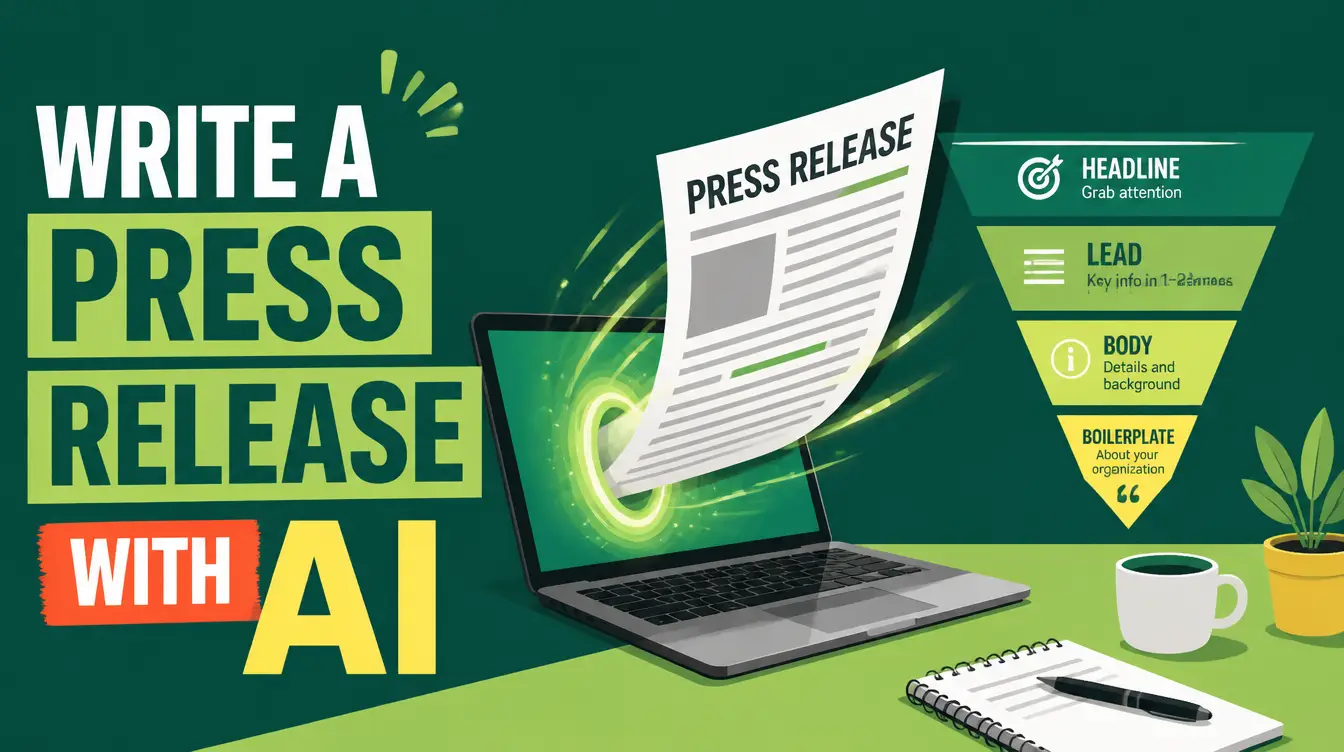
The inverted pyramid is the newsroom's structure: the most newsworthy fact first, the supporting detail below it, and the background last — so an editor can cut from the bottom without losing the story. It was invented for telegraph wire cuts and survives because it matches how editors actually read: they decide in the first sentence whether the release is news. Every element that delays the news — the founder's vision statement, the "is thrilled to announce" throat-clearing, the paragraph about how great the company is — is a reason to stop reading.
| Press release section | The amateur version | The inverted pyramid version |
|---|---|---|
| Headline | Clever wordplay about the brand | The news itself, in one line, in plain language |
| First paragraph | "XYZ is thrilled to announce..." | Who, what, when, where — the news, stated immediately |
| Body | Features listed as benefits | Supporting facts in descending newsworthiness, quotable by journalists as-is |
| Background | Mission statement repeated again | Company boilerplate and contact, at the bottom where cuts belong |
What do the honesty rules have to do with getting covered?
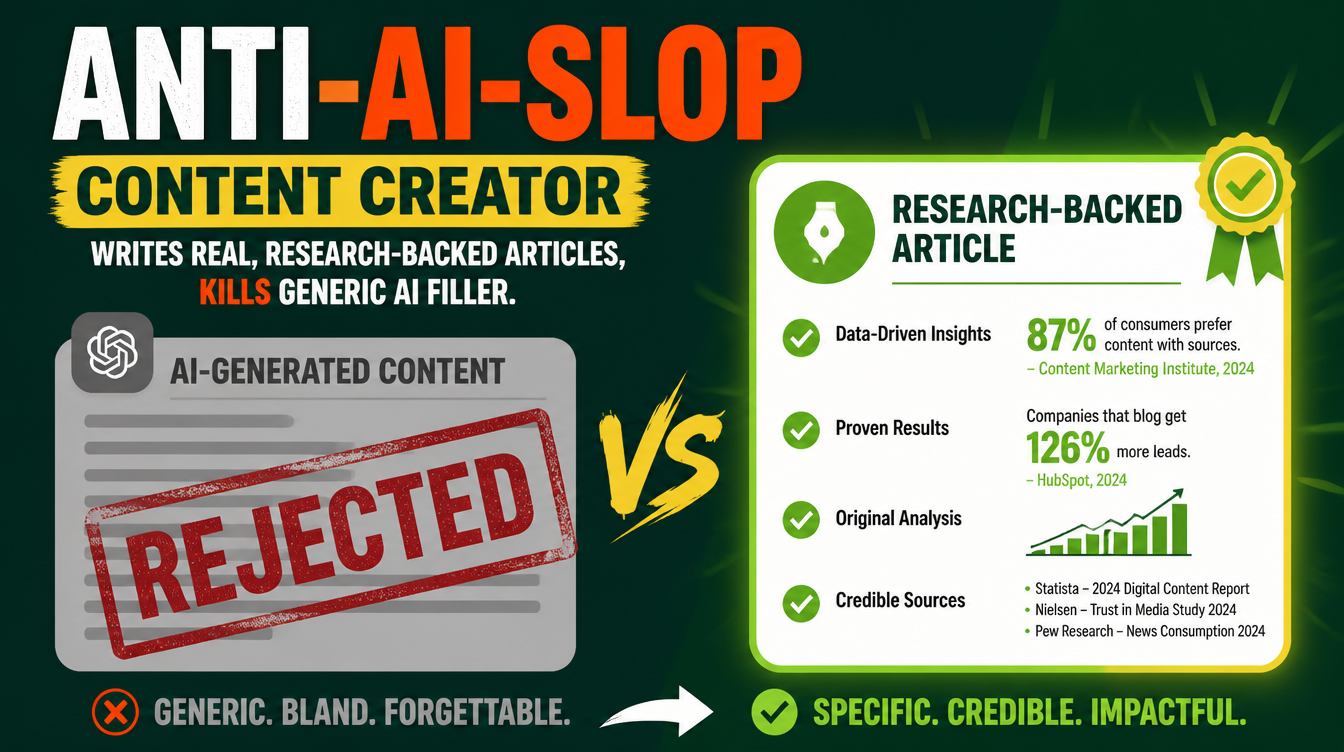
Everything, because a journalist's job is verifying claims, and a release full of unverifiable ones is work, not news. The Anti-AI-Slop Content Creator brings three built-in rules that map onto newsroom ethics exactly. It never invents a statistic, study, quote, or citation — if reliable data does not exist, it says so, which reads as expertise rather than weakness. It never writes a headline the content does not pay off — the single most common reason a release gets opened and then dropped. And it applies the replacement test to every sentence, so the release says something only your company could say about this news, instead of the interchangeable enthusiasm every other release contains. The same discipline, applied to longer formats, is unpacked in the anti-slop writing guide.
A journalist does not owe your news coverage. A press release's only job is to make covering it less work than ignoring it — and the inverted pyramid with real facts does exactly that.
How do you draft the release with the skill, step by step?
- Run the intake interview and state the news in one sentence — the actual event, launch, or number, not a feeling about it.
- Gather only verifiable material: real figures from your own records, the real quote you or your spokesperson will stand behind, the real date.
- Let the skill draft in inverted-pyramid order: news headline, who-what-when-where lead, descending detail, boilerplate at the bottom.
- Check the quote discipline: the quote in the release must be a real statement a real person said — the skill refuses to invent one, so supply it or drop it.
- Run the self-review checklist — the skill's built-in pass that hunts filler vocabulary, fake enthusiasm, and headline-body mismatches.
- Publish and measure: distribute, then run the SEO & AEO Analysis skill on the release page to see whether search engines and AI answer engines can actually find and cite it — the visibility layer is covered in SEO vs AEO.
What happens to the release after it is written?
It becomes a page, and pages get found or do not. The SEO & AEO Analysis skill audits the release page for on-page performance and quick wins, analyzes keyword opportunities and search intent alignment, and evaluates readiness for AI answer engines — which increasingly are where people ask "what did Company X launch?" A release that neither Google nor ChatGPT can surface effectively did not happen, no matter how many inboxes it reached. The audit workflow is documented in the free website optimization guide, and the wider citation game — getting quoted inside AI answers — is covered in the AEO guide for skill creators.
FAQs
Can AI write a good press release?
Yes, when it is constrained to the newsroom format and ethics. The Anti-AI-Slop skill drafts in inverted-pyramid order, refuses to invent statistics or quotes, and never writes a headline the body does not pay off — the three failures that get releases deleted.
What is the inverted pyramid in a press release?
The newsroom structure: the most newsworthy fact first, supporting detail below, background last. Editors can cut from the bottom without losing the story, and they decide in the first sentence whether your release is news.
Can the skill generate quotes for me?
No — by design. It never invents a quote or statistic, so the quote in your release is one you or your spokesperson actually said. You supply the quote or the release runs without one, which is better than a fabricated one.
How much does the skill cost?
The Anti-AI-Slop Content Creator and the SEO & AEO Analysis skill are both free on Mahara AI. Paid skills on the platform start at 499 EGP (about $10 USD), there is a 499 EGP per month claim-and-keep subscription, and every purchase carries a 7-day refund.
Should I put my press release on my website?
Yes — that is where search and AI engines look for it. Publish it as a page, then run the SEO & AEO Analysis skill on it to check keyword alignment and answer-engine readiness so the release can be found and cited, not just emailed.
Your news deserves more than an inbox funeral. Download the two skills, write the lead sentence first, and send the release an editor can copy as-is.