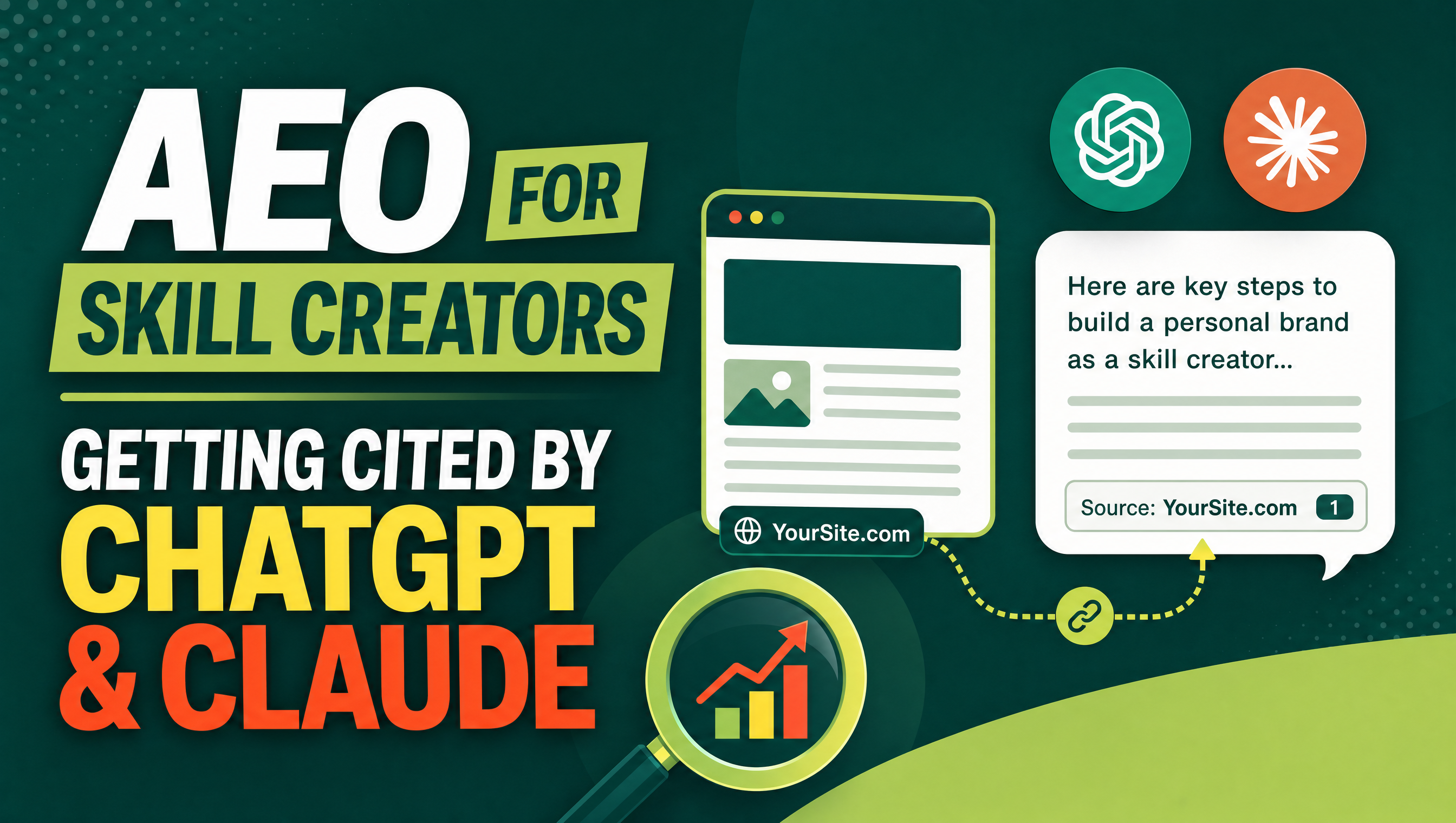
AEO for skill creators is the practice of writing your product pages, listings, and articles so that answer engines like ChatGPT, Claude, and Perplexity quote them. In one sentence: make every important point a short, self-contained passage that starts with the answer, and engines will cite you. If you build AI skills, this guide shows exactly how to write content the machines love to quote. For the bigger picture on how AI search differs from Google rankings, read our pillar guide on the difference between SEO and AEO.
Here is why this matters to you specifically. People now ask ChatGPT things like "what is the best skill for reviewing contracts?" — and whatever the model answers is shaped by pages it can quote. A skill creator whose pages are quotable gets recommended inside answers. A creator whose pages bury the point under vague branding gets skipped. The seven tactics below change that.
What is AEO in one sentence?
AEO (Answer Engine Optimization) means structuring your content so AI answer engines can extract, trust, and cite it — direct answers first, clear questions as headings, structured data, and explicit entity names. It is the difference between being the answer and being invisible.
Tactic 1: Put the answer first under every heading
Answer engines extract the first self-contained passage under a heading. So make the first sentence after each question-shaped H2 or H3 a complete, standalone answer. Do not build up with a story and land on the point three paragraphs later — lead with it, then explain.
Tactic 2: Use question-shaped headings
Write headings as the exact questions users ask the AI: "What is a contract review skill?", "How much do AI skills cost?". When a user's question matches your heading and the passage below answers it cleanly, you have built a citation magnet. Vague headings like "Our vision" are unquotable.
Tactic 3: Give clean definitions
Answer engines adore the pattern "X is a ...". If your page defines your product plainly — a skill is a downloadable folder with a SKILL.md manifest that teaches an agent a repeatable workflow — engines can lift that sentence verbatim. Definitions are the most-quoted sentence shape on the web.
Tactic 4: Add FAQ sections and FAQPage schema
Every product page and article should end with real questions and concise answers, marked up with FAQPage structured data. The Mahara AI blog already emits BlogPosting, FAQ, and HowTo schema, so its articles surface as clean question-answer pairs that engines parse confidently. If you publish on your own site, add the same schema.
Tactic 5: Build comparison tables
Tables are dense, structured facts — exactly what engines prefer over prose. Compare your skill to alternatives, or compare workflows with and without it. A table row is a ready-made answer fragment.
Tactic 6: Name entities explicitly
Say the names: Mahara AI, Claude, Manus, ChatGPT. Engines build knowledge about entities from consistent naming across pages. If your page talks vaguely about "our platform" and "popular AI tools", no entity graph connects to you. Consistent branding — same product name, same tagline, same author name — makes you a citable entity rather than an anonymous page. Publishing an llms.txt file that lists your key pages for AI crawlers, as maharaai.com does, reinforces the same signal.
Tactic 7: Make every passage self-contained
A citable passage works out of context: no "as mentioned above", no pronouns pointing at earlier paragraphs. Short paragraphs, one idea each, quotable alone. That is the mechanical secret behind all the other tactics.
Before and after: rewriting a listing
Before: "Unlock the next generation of productivity with our revolutionary AI-powered solution designed to transform your daily workflow experience." After: "The contract review skill is a downloadable AI skill that reads contracts inside Claude, flags risky clauses, and produces a clause-by-clause summary table in about two minutes."
The first sentence says nothing an engine can quote. The second answers what it is, where it runs, and what you get — three citable facts in one sentence. Rewrite every headline and product description on your site with this test: could an engine lift this sentence and be correct? If not, tighten it until it could.
The AEO checklist for skill creators
| Tactic | Why engines love it | Do this |
|---|---|---|
| Answer-first writing | The first passage under a heading is what gets extracted | Open every section with a complete one-sentence answer |
| Question-shaped headings | Matches the literal questions users ask AI | Rewrite H2s as real questions |
| Clean "X is a..." definitions | The most quotable sentence pattern | Define your skill plainly on its page |
| FAQ + FAQPage schema | Machine-readable question-answer pairs | Add 5 real FAQs with structured data |
| Comparison tables | Dense structured facts beat prose | Compare your skill to alternatives |
| Explicit entities + llms.txt | Consistent names build a citable identity | Say Claude, Manus, ChatGPT, Mahara AI by name; publish llms.txt |
Which skill runs an AEO audit for you?
You do not have to check all of this by hand. The SEO-AEO analysis skill audits a URL and returns a prioritized fix list — missing schema, weak answer passages, entity gaps. Pair it with our guide on auditing your website SEO with AI and the walkthrough on optimizing your website with a free AI skill. New to skills altogether? Start with what an AI skill is.
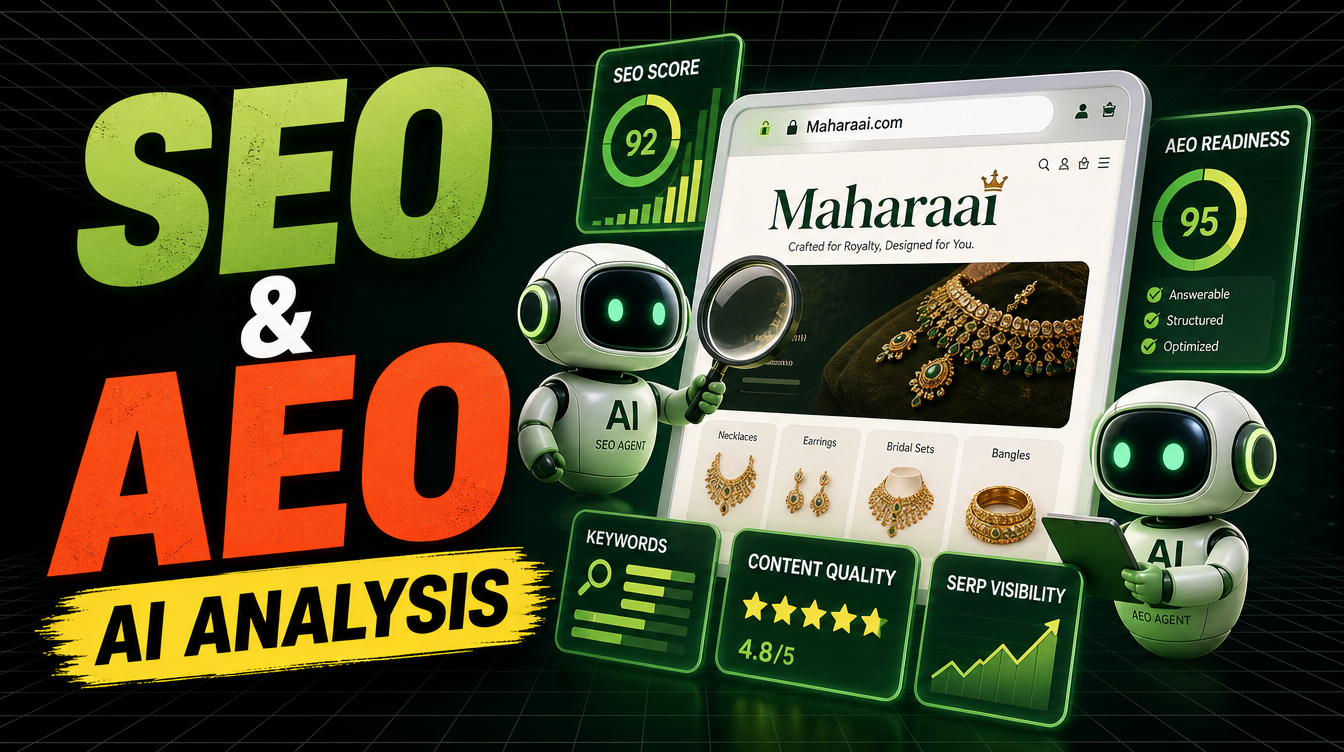
Write so machines can quote you, and they will. Explore the skills in the Mahara AI library — including the SEO-AEO analysis skill — and make your next listing citation-ready.