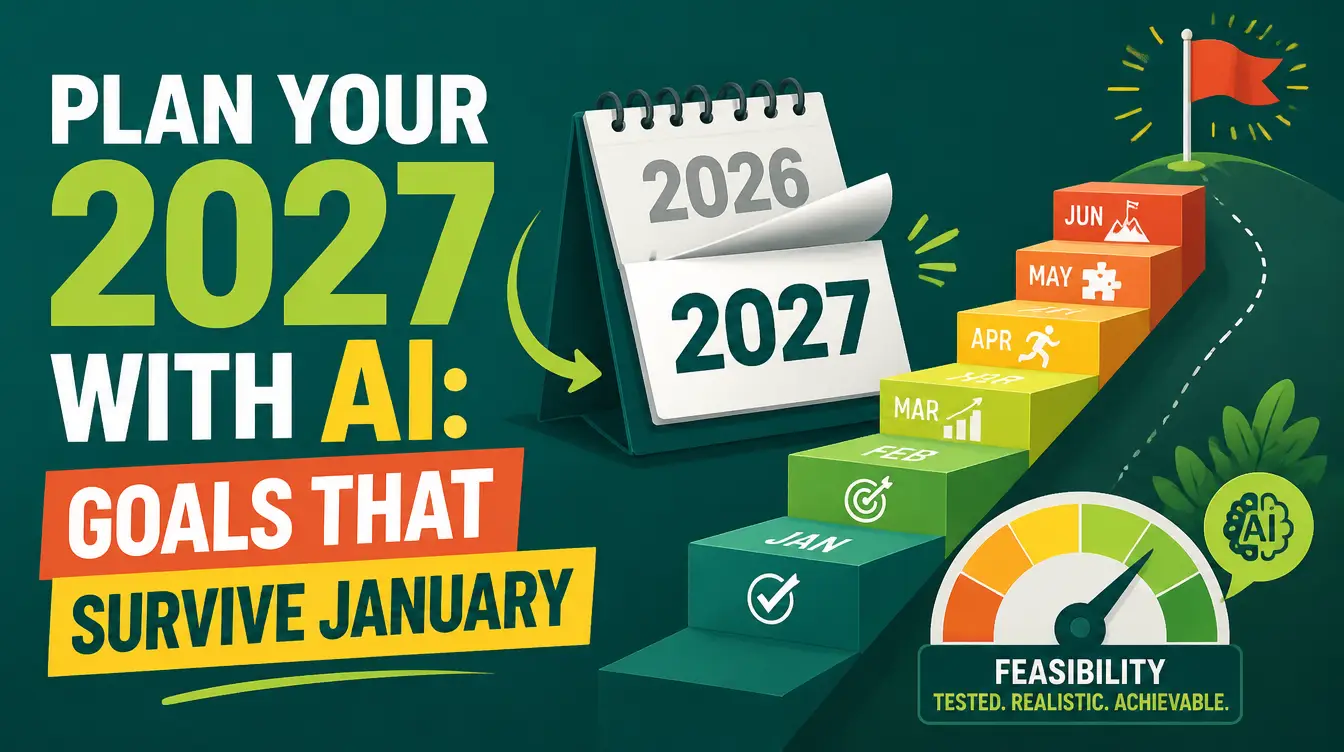
November is when the 2027 plans get made — and January is when most of them die. The pattern is so consistent it deserves a diagnosis: the goals were set against vibes, not numbers. Nobody checked whether the goal was feasible against actual income and expenses, nobody broke it into months, and nobody built a tracker that survives week three. Planning your 2027 with AI skills fixes all three failures: the Goal Architect skill pulls your real financial data, tests each goal's feasibility, and builds a month-by-month plan with a live dashboard; the Financial Goal Planner turns any goal into an interactive calculator; and the Excel Generator produces the tracking file you will actually keep open. All three are free, and this guide runs the full annual workflow.
If the skill format is new: a skill is a packaged workflow an AI agent executes for you — what an AI skill is covers it in two minutes. Then we plan the year.
Why do most New Year plans die by February?
Three causes, and they compound. The goal was never feasible — the math was never run against real income, expenses, and the subscriptions everyone forgets. The goal was never broken down — "save for the apartment" is a wish, not a plan, until it becomes monthly numbers. And there was no tracker — no dashboard, no feedback loop, nothing that shows drift while drift is still cheap to fix. The skills below exist to close exactly those gaps, in order:
| Annual planning failure | Skill that closes it | What you get |
|---|---|---|
| Goals set against vibes | Goal Architect | Real data from Era — income, expenses, subscriptions — with each goal's feasibility tested before you commit |
| "Save more" instead of numbers | Financial Goal Planner | A single-file interactive calculator: affordability, hidden costs, monthly savings, real-time scenario editing |
| No tracker that survives week three | Excel Generator | A polished tracking file with charts, conditional formatting, and a KEY INSIGHTS summary — built from one request |
How does the Goal Architect test feasibility?
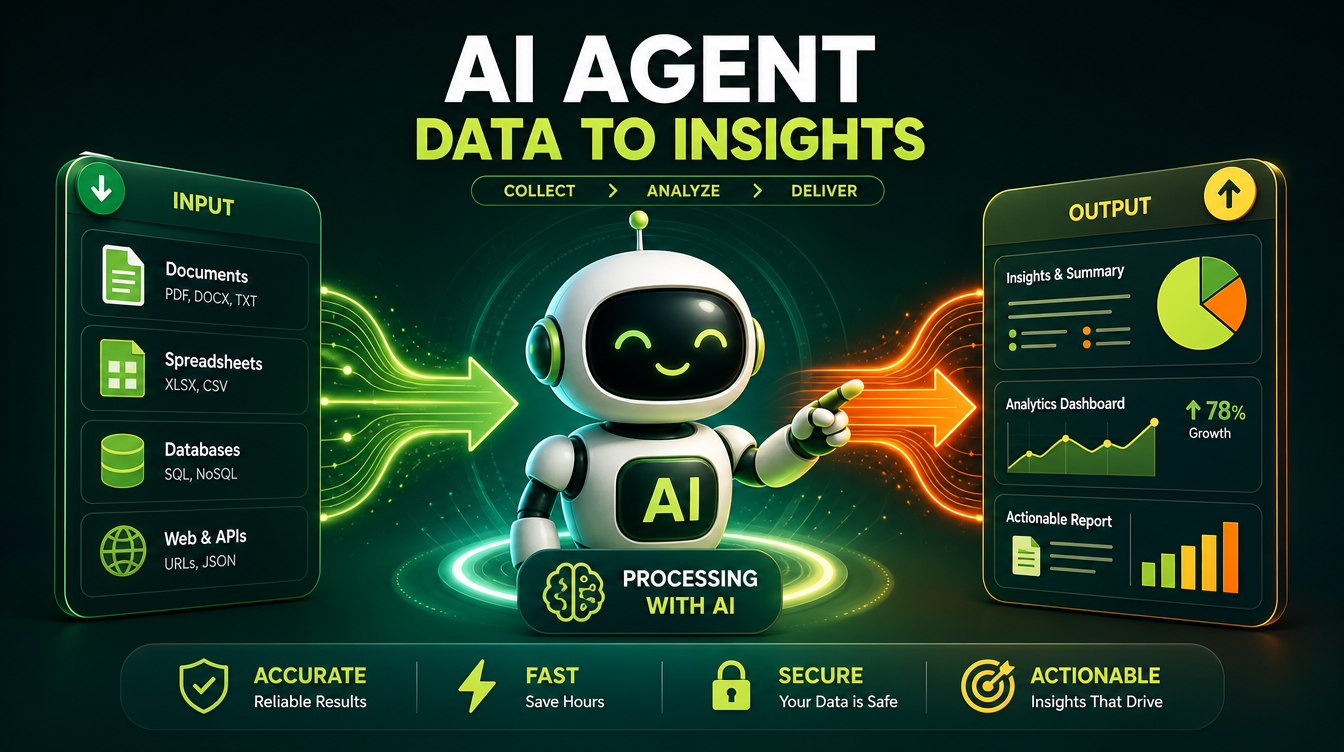
It listens to the dream, then interrogates it with your actual finances. The skill starts from your financial pain or ambition, pulls real data from Era — income, expenses, subscriptions — defines the goal precisely, and tests whether it is feasible before building the plan. Then it constructs a customizable savings plan in three flavors — conservative, balanced, aggressive — with an interactive dashboard and goal tracking back in Era. The step-by-step mechanics are in the Goal Architect skill guide; for annual planning, the feasibility gate is the piece that matters, because it kills the impossible goals in November instead of letting them die of embarrassment in March.
A goal you did not test against your real numbers is not a plan. It is a hope with a deadline — and the deadline is usually January 19.
How do you plan your 2027 with AI skills, step by step?
- Run the 2026 review honestly: pull up the year's income, expenses, and subscriptions — the Goal Architect's Era integration surfaces the real figures, not the remembered ones.
- List the 2027 candidates: the apartment down payment, the emergency fund, the certification, the business runway. Write each as a goal, not a vibe.
- Test each goal's feasibility with the Goal Architect: it defines the goal precisely, checks it against the real data, and tells you which goals fit the year and which need a longer runway.
- Turn each surviving goal into a calculator with the Financial Goal Planner: affordability, hidden costs, Islamic finance options where relevant, and monthly savings — all editable in real time so you can move the target date and watch the monthlies move.
- Build the year's tracking file with the Excel Generator: one request describing the goals, the months, and the drift warnings you want — then open a finished file with a KEY INSIGHTS sheet and charts.
- Review monthly, not annually: the dashboard shows drift while it is one month old, and the plan flavors — conservative, balanced, aggressive — let you re-pace the year without re-planning it.
What about goals that are not savings goals?
The same pipeline handles most of them, because the hard part is identical: definition, feasibility, breakdown, tracking. The Financial Goal Planner takes any financial goal — property, car, wedding, investment, emergency fund — and builds the single-file interactive calculator around it; the deep dive is in the Financial Goal Planner guide. The craft of choosing goals that survive — the psychology, not just the math — is covered in the goals-you-actually-finish guide; run that thinking first, then let these skills do the arithmetic.

Why build the tracker in Excel at all?
Because the tracker has to outlive the enthusiasm, and a file you can open anywhere beats an app you abandon. The Excel Generator skill turns the request into a polished spreadsheet — charts, conditional formatting, pivot-ready layouts, data-validation controls, and a KEY INSIGHTS sheet with pre-calculated summaries — so the monthly review is one glance, not one evening. The heavier finance version of the same pattern is demonstrated in the budgets and reports workflow; for annual planning, the file is usually one row per month per goal, with the drift highlighted before it becomes a collapse.

FAQs
How do I plan my 2027 with AI?
Run a three-skill workflow: the Goal Architect tests each goal against your real Era data (income, expenses, subscriptions) and builds a month-by-month plan; the Financial Goal Planner turns each goal into an interactive calculator; and the Excel Generator builds the tracking file with charts and a KEY INSIGHTS sheet.
Are these planning skills free?
Yes — Goal Architect, Financial Goal Planner, and Excel Generator are free on Mahara AI. Paid skills on the platform start at 499 EGP (about $10 USD), there is a 499 EGP per month claim-and-keep subscription, and every purchase carries a 7-day refund.
How does the Goal Architect know my real finances?
It pulls real financial data from Era — income, expenses, and subscriptions — then defines the goal precisely and tests its feasibility before building a savings plan in conservative, balanced, or aggressive flavor, with an interactive dashboard and Era goal tracking.
What if my goal turns out not to be feasible?
That is the skill doing its job in November instead of March: the feasibility gate tells you which goals fit the year and which need a longer runway, and the plan flavors let you re-pace — conservative, balanced, or aggressive — rather than abandon.
Does this work for business goals too?
The pipeline — define, test feasibility, break into months, track — works for any goal with numbers attached, and the Financial Goal Planner explicitly handles investment and emergency-fund scenarios alongside personal ones.
2027 arrives either way. Claim the three free skills and arrive at it with a plan that already survived the math.