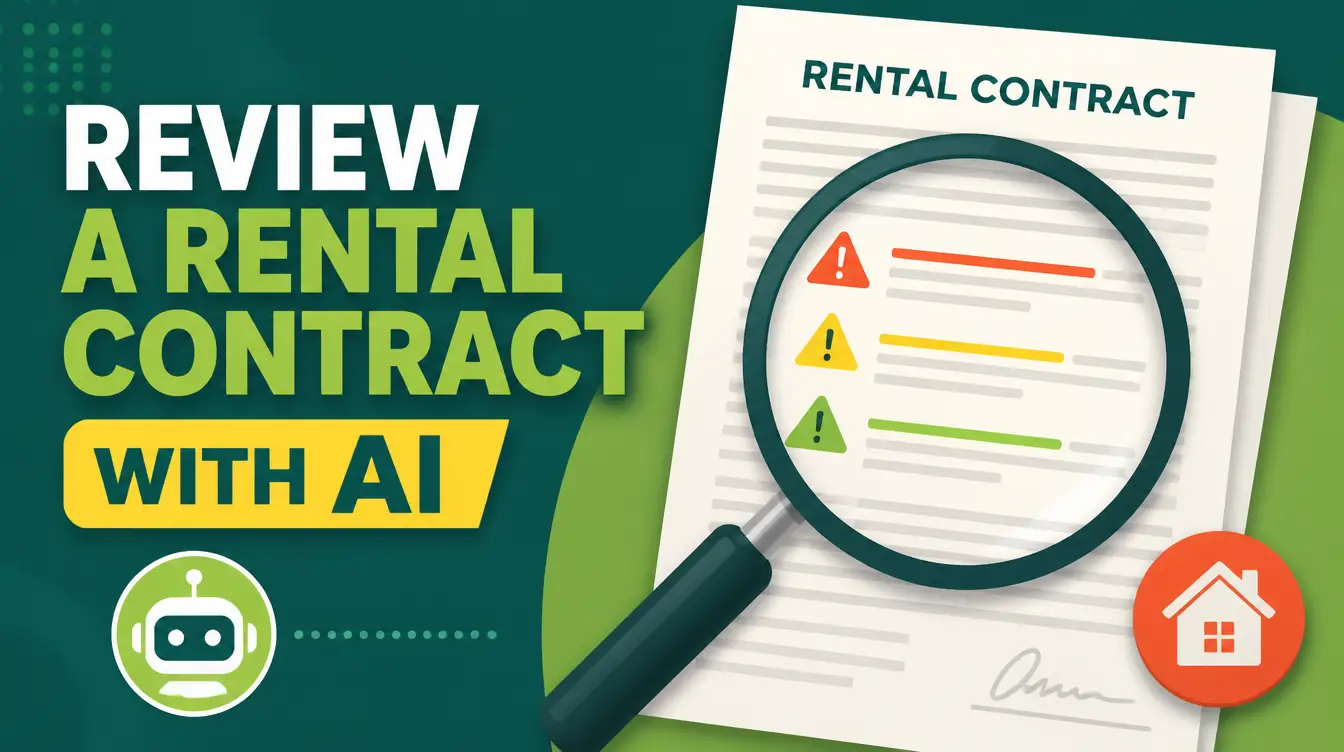
Reviewing a rental contract with AI before you sign takes about ten minutes and catches the clauses that cost tenants their deposits, their notice rights, and sometimes their next apartment. The AI Contract Reviewer skill reads the full lease in Arabic or English, scores every clause from 1 to 10 by risk, color-codes the contract body, and hands you a dashboard with a verdict and a prioritized checklist — before your signature is anywhere near the page. This guide shows how to run the review, which clauses matter most for renters, and how to pair it with a rent-versus-buy check when the lease is only step one.
We have applied the same skill to general contract review and employment contracts — this one is for the document nearly every renter signs without reading.
What does an AI review of a rental contract actually produce?
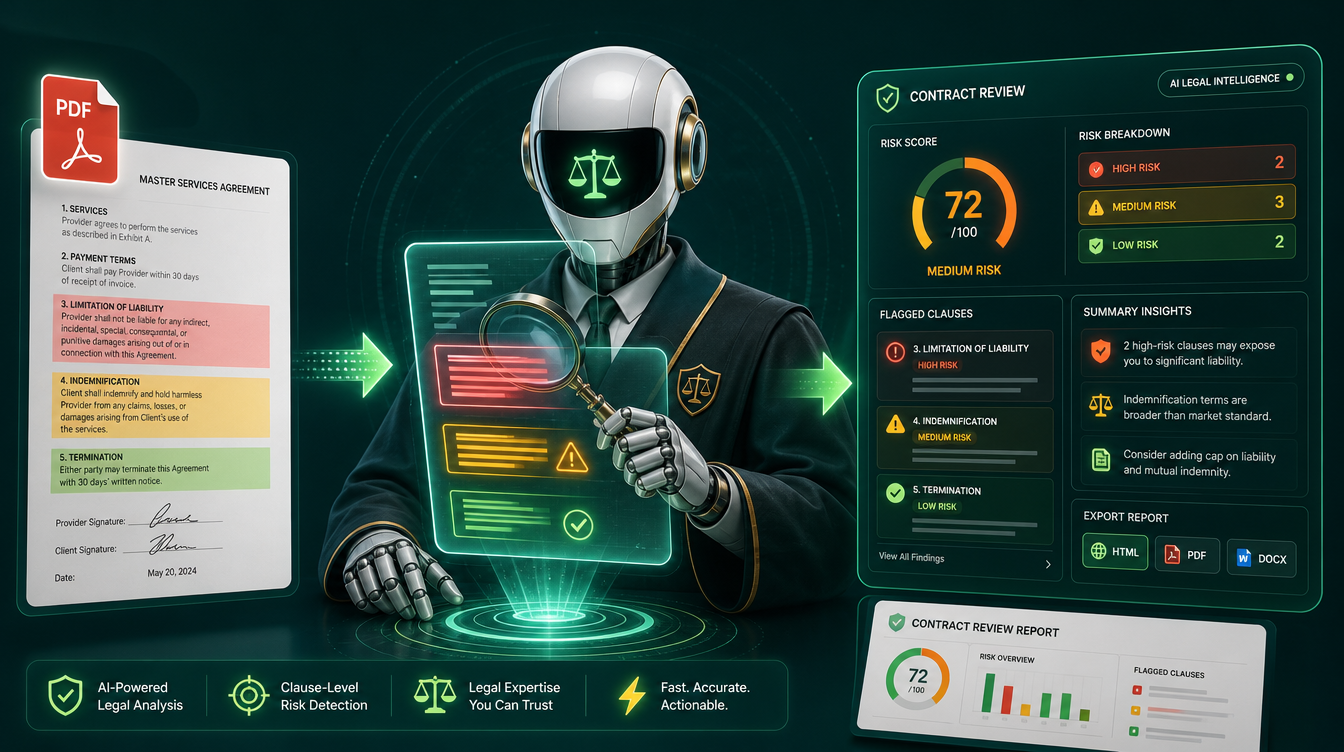
A machine-readable first pass, not a legal opinion. The skill analyzes the lease in Arabic or English, scores every clause from 1 to 10 by risk, and highlights them color-coded inside the full contract body. It auto-detects the governing law, the contract type, and your role — critical in a lease, because the document is usually written for the landlord's benefit. The output is a self-contained interactive HTML dashboard: a verdict on the contract as a whole, the top issues ranked, and a prioritized action checklist of what to negotiate before signing.
Which clauses should renters check before signing?
The skill checks everything, but these are the clauses that decide whether a lease is safe:
- Security deposit — how much, held by whom, and under what conditions is it returned?
- Rent escalation — is there an annual increase, and is the percentage capped or open-ended?
- Maintenance obligations — which repairs are yours and which are the landlord's, stated or silent?
- Notice and early exit — what happens if you leave before the term ends, and with what penalty?
- Utilities and service charges — which bills transfer to you, and which stay with the property?
- Renewal terms — does the lease auto-renew, and who decides the new rate?
- Subletting and use — are you allowed a roommate, a home office, or a business registration at the address?
What does the dashboard tell you?
| Dashboard element | What it means for a renter |
|---|---|
| Clause scores (1-10, color-coded) | You see instantly which clauses carry real risk and which are routine boilerplate |
| Verdict | A bottom-line read on the lease as a whole |
| Top issues ranked | The two or three points worth negotiating before you sign |
| Prioritized action checklist | Exact amendments to request, in order |
| Auto-detected governing law and role | The review reads the lease from the tenant's side of the table |
The landlord wrote this contract once, with advice. You read it once, at midnight, tired. The skill exists to even that table out.
How do you review your own lease step by step?
- Download the AI Contract Reviewer skill from Mahara AI and load it into your assistant — Claude, Manus, or any agent that accepts skills.
- Paste the full rental contract exactly as you received it, in Arabic or English, including every annex and inventory list.
- Confirm the auto-detection: contract type, your role, and the governing law should match the deal you think you agreed to.
- Read the verdict dashboard first, then open the color-coded contract body around every clause scored as high risk.
- Take the action checklist to the landlord or a qualified lawyer for the flagged items, and negotiate the amendments before signing — never after.
What if you are still deciding between renting and buying?
Run the lease through the reviewer, then run the decision through the Real Estate Finder skill. It builds a six-tab interactive dashboard covering your profile, affordability, property comparison, investment ROI, a rent-versus-buy breakeven analysis, and recommendations, for Egypt, KSA, UAE, and the wider MENA region. The two outputs side by side — the risk in this lease, the breakeven on this market — are the full picture a move decision needs. We covered the property side in the Real Estate Finder guide.

Does it work on Arabic rental contracts?
Yes — the skill analyzes contracts in Arabic or English and auto-detects the governing law, which across much of MENA means an Arabic-language lease under local tenancy law. The same workflow applies from Cairo apartments to Dubai units; for the Egyptian specifics, see AI contract review for Egypt. And if you manage multiple units yourself, the agency-scale version is covered in automating contract review for agencies.
FAQs
Can AI review a rental contract?
Yes, as a first pass. The AI Contract Reviewer skill scores every clause from 1 to 10 by risk, color-codes the full lease body, and produces a dashboard with a verdict, top issues, and a prioritized action checklist — in Arabic or English.
Does AI contract review replace a lawyer?
No. The skill is a triage tool: it tells you which clauses carry risk so you know what to negotiate or escalate. Final legal judgment belongs to qualified counsel — the dashboard just makes that conversation ten minutes instead of an hour.
Which clauses cause the most trouble for tenants?
Deposit return conditions, uncapped rent escalation, silent maintenance obligations, early-exit penalties, and renewal terms. The skill flags each of these — and any others specific to your lease — with a risk score.
Can the skill help decide between renting and buying?
Indirectly, yes. Pair it with the Real Estate Finder skill, whose dashboard includes a rent-versus-buy breakeven analysis alongside affordability and ROI tabs, covering Egypt, KSA, UAE, and the wider MENA region.
How much does the AI Contract Reviewer skill cost?
It is free on Mahara AI. Paid skills on the platform start at 499 EGP (about $10 USD), there is a 499 EGP per month claim-and-keep subscription, and every purchase carries a 7-day refund.
A lease binds you for a year; a bad clause binds you for all of it. Browse the Mahara AI skills library and read your next lease like the person who wrote it.