An agency signs more contracts than it ships invoices. NDAs arrive before the first call, master service agreements before the first brief, freelancer and vendor agreements somewhere in between. Each one deserves a careful read, and almost none of them get it — the pipeline moves too fast. This is how to automate contract review for your agency without pretending a language model is a lawyer: let a skill do the first pass on every document, and spend your legal budget only where the risk actually lives.
What does automated contract review actually mean?
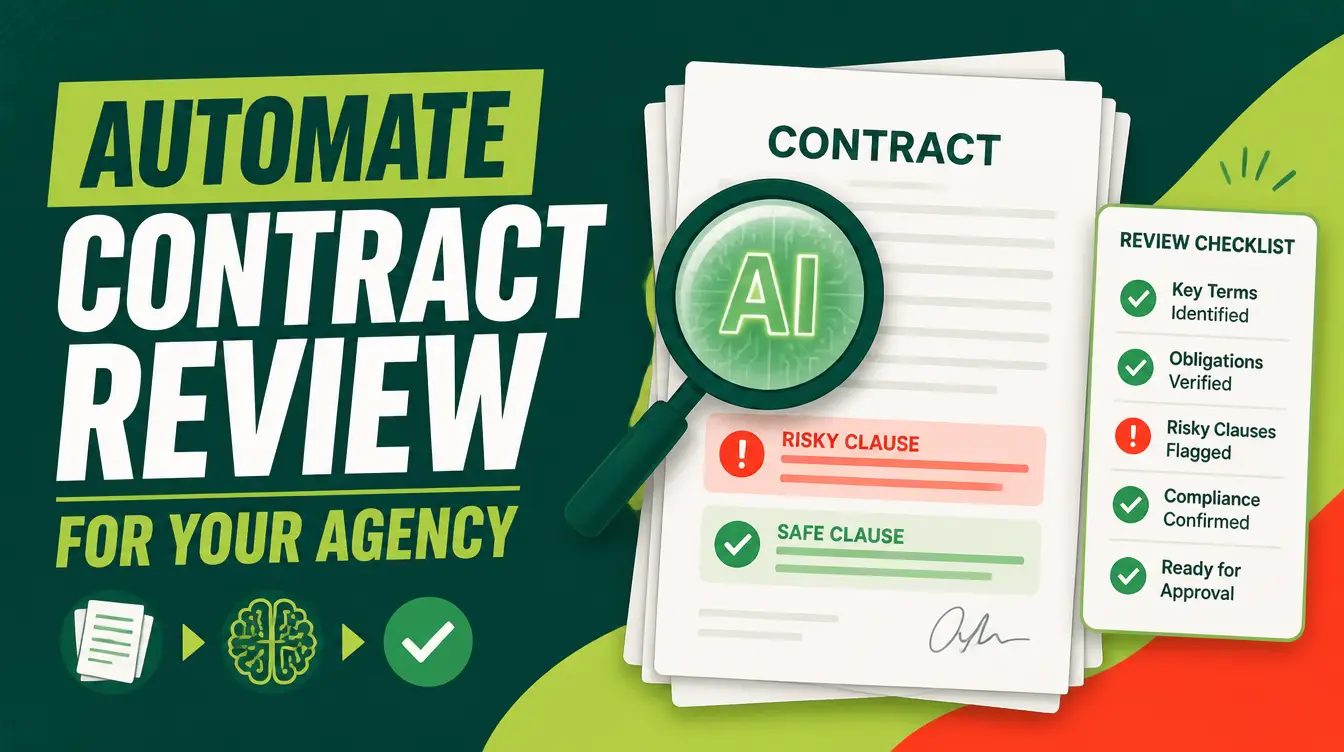
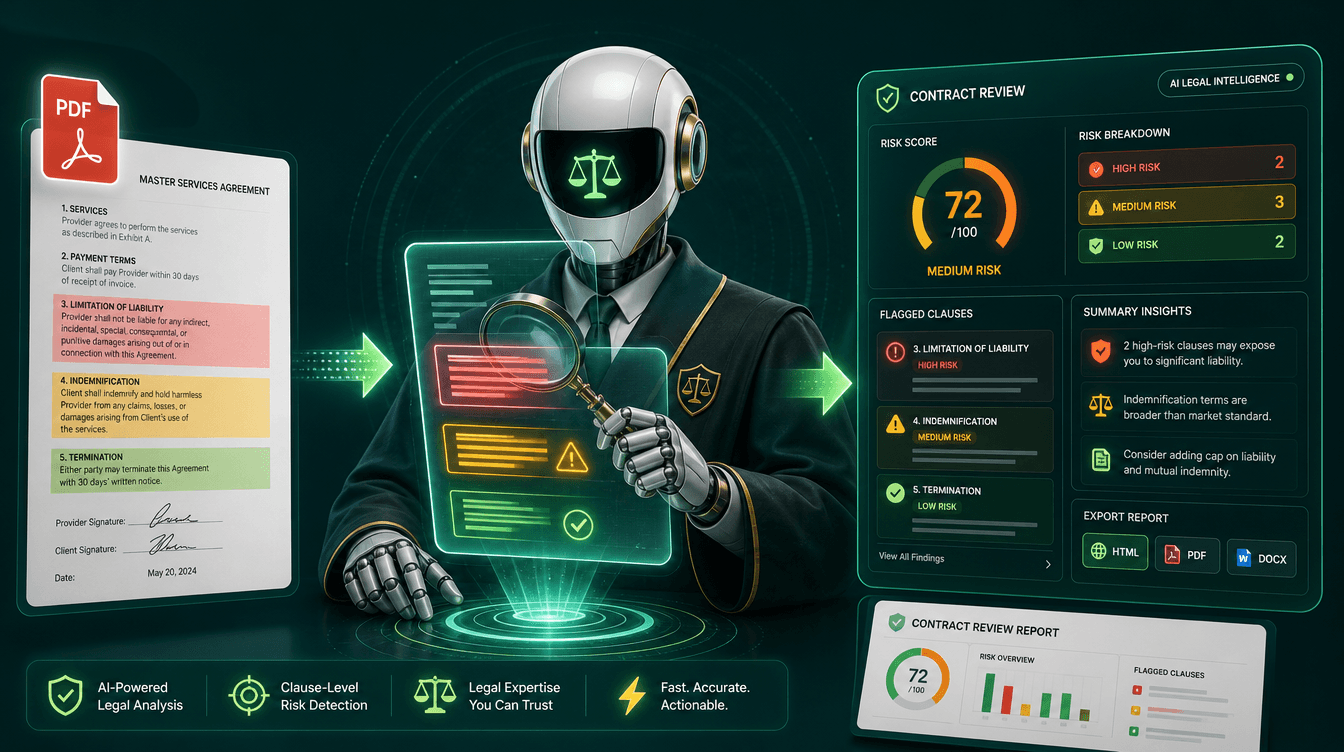
It means a machine-readable first pass, not a legal opinion. The AI Contract Reviewer skill analyzes contracts in Arabic or English, scores every clause from 1 to 10 by risk, and highlights them color-coded inside the full contract body. It auto-detects the governing law, the contract type, and your role in it — because the same clause reads differently for the client than for the contractor. Then it hands you a self-contained interactive HTML dashboard: a verdict, the top issues, and a prioritized action checklist.
If you have never run a contract through an assistant before, start with the general walkthrough in how to review a contract with AI; the Egypt-specific angles are covered in the Arabic contract review guide.
Why does an agency need this more than anyone?
Volume with asymmetry. A solo founder signs one contract a month; a ten-person agency can push five a week across clients, freelancers, and vendors. Nobody on the team is a lawyer, everyone is pressed for time, and the cost of a skipped indemnity clause lands months later. The skill does not get tired on contract number four of the afternoon — every clause gets the same 1-to-10 scoring, every time. That consistency is the entire point: automated daily work removes the human variance, not the human judgment.
What changes in your workflow?
| Step | Manual first pass | With the skill |
|---|---|---|
| Reading the draft | Skim once, hope the bad clause jumps out | Every clause scored 1–10 and color-coded |
| Knowing where you stand | Gut feel plus memory of past deals | Verdict dashboard with top issues ranked |
| Writing follow-ups | Re-read the contract hunting for section numbers | Prioritized action checklist ready to send |
| Escalating to counsel | Everything or nothing | Only the clauses the score says matter |
The skill does the first pass. Your lawyer does the last one. Confuse the two and you inherit the risk you were trying to remove.
How do you run the agency workflow?
- Intake every contract the day it arrives — NDA, MSA, freelancer agreement, vendor deal — and run the review before anyone signs enthusiasm.
- Read the verdict dashboard first, then the color-coded contract body for context around each flagged clause.
- Check what the skill detected about governing law and your role, and confirm it matches the deal you think you made.
- Track the flagged issues across clients in one spreadsheet, so the same vendor clause gets caught the second time too.
- Escalate anything scored high-risk to qualified counsel, with the dashboard as the briefing document.
Step four is where agencies compound the value. The Excel Generator skill turns that request into a properly formatted tracker — one row per flagged clause, conditional formatting by risk level, dropdowns for status — so patterns across contracts surface instead of evaporating after each deal.

Which contracts should go through it first?
All of them, but start with the recurring ones: the NDA your sales team signs without reading, the freelancer agreement your project managers copy-paste, the vendor terms that auto-renew. The auto-detection matters here — the skill recognizes the contract type and your role, so the same review run works when you are the client and when you are the contractor. For the broader picture of running a small business on skills, see the small business stack.
FAQs
Does AI contract review replace a lawyer?
No. The skill is a first-pass triage tool: it scores every clause and ranks the issues so you know what to ask about. Legal advice and final judgment belong to qualified counsel — the dashboard just makes that conversation ten minutes instead of an hour.
Does it work on Arabic contracts?
Yes. The skill analyzes contracts in Arabic or English, and it auto-detects the governing law, the contract type, and your role in the agreement before scoring.
How does the risk scoring work?
Every clause is scored from 1 to 10 by risk and highlighted color-coded in the full contract body. The interactive HTML dashboard then presents the verdict, the top issues, and a prioritized action checklist.
What does the skill cost?
Some skills on Mahara AI are free, and paid skills start at 499 EGP (about $10). There is a 499 EGP per month claim-and-keep subscription, and a 7-day refund if a skill is not right for you.
Which contracts should an agency run through it?
The recurring ones first: NDAs, master service agreements, freelancer agreements, and vendor terms. The skill auto-detects the contract type and your role, so one workflow covers both sides of the table.
Your agency will never run out of contracts. It can run out of patience for reading them badly. Browse the Mahara AI skills library, put the contract reviewer on intake duty, and save the lawyer for the clauses that earn it.