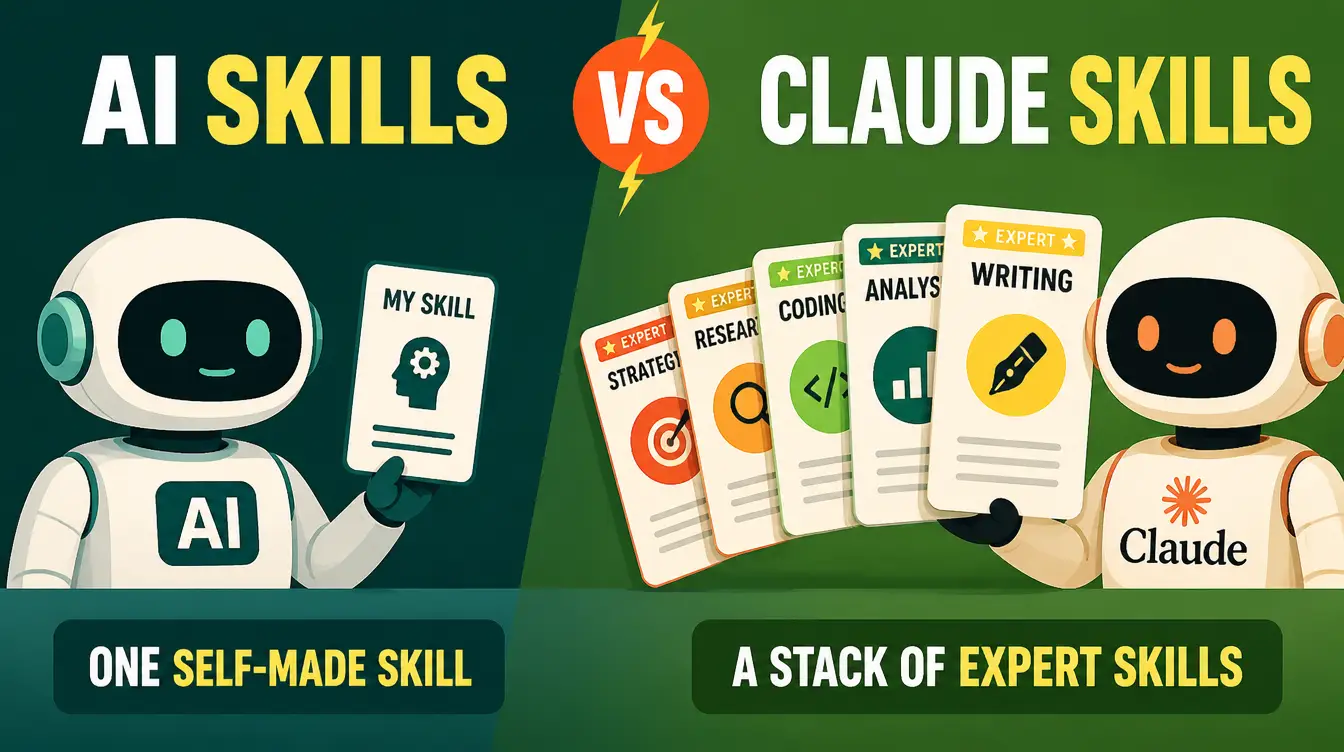
Search for "AI skills vs. Claude skills" and you will find two camps talking past each other. One insists they are the same thing; the other treats them as rivals. The honest answer is more useful than either: at the format level they are the same technology, and at the ecosystem level they are different products. Understanding that split decides whether you spend your weekends writing skill files or your money buying better ones.
This comparison lays out what is identical, what differs, and which choice fits which situation — with no vendor loyalty and no cheerleading. By the end you will know exactly which side of the line your work falls on.
Are AI skills and Claude skills the same thing?
At the format level, yes. A skill — whether you call it a Claude skill or an AI skill — is a folder containing a SKILL.md file plus optional references, templates, and scripts. The assistant reads that folder and gains an ability: reviewing contracts, optimizing YouTube videos, writing Arabic content that does not read like a translation. The packaging standard is the same; the folder your agent loads does not care where it came from.
Claude deserves real credit here: it made this packaging famous and proved that ordinary users would install abilities rather than re-engineer prompts forever. Mahara AI builds on the same open approach — which is why the same skills run inside Claude and inside Manus.
What do "Claude skills" mean in practice?
When people say Claude skills, they usually mean building your own: you write the SKILL.md, you assemble the reference files, you test it against your own tasks, and you maintain it when results drift. That path makes total sense when the skill encodes knowledge only you have — your agency's intake process, your pricing logic, the way you edit podcasts. We break down what goes inside those files in skill manifests explained: what is inside SKILL.md.
The catch is cost. Writing a good skill is prompt engineering with structure: you need the instructions, the workflow, the edge cases, and the self-review loop. For common professional work — SEO audits, price research, CV coaching — dozens of practitioners have already done that work. Rebuilding it yourself is like writing your own spreadsheet app before making a budget.
What do marketplace AI skills add?
Three things a self-written file cannot give you. First, authorship: skills on Mahara AI are written by people who do the work — the Arabic Anti-AI-Slop Content Creator below was built for the Arabic web, hunting ten Arabic-specific slop tells that generic English tools never see.

Second, portability. A marketplace skill is tested across agents, so the same file runs in Claude today and Manus tomorrow — see how to use Mahara skills in Claude and the best skills for Manus. Your DIY skill works wherever you personally maintain it.
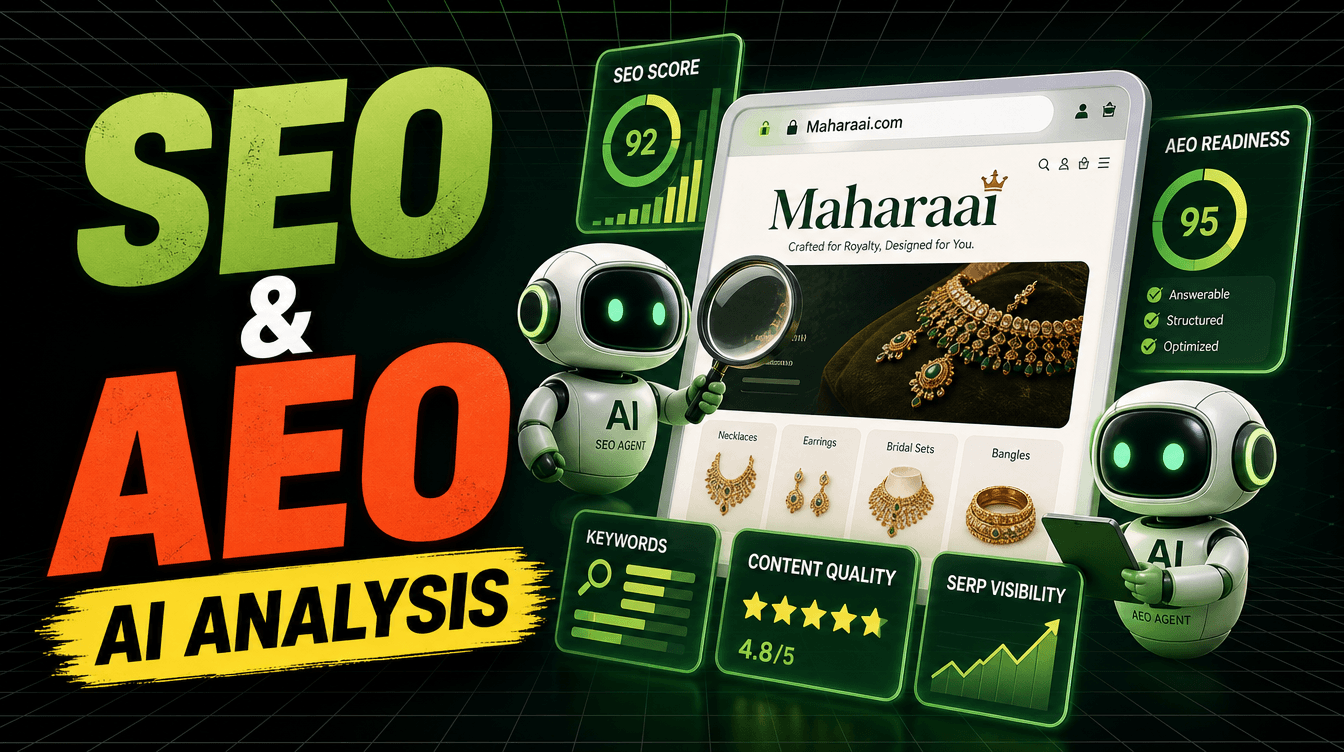
Third, language coverage. Most self-written skills inherit whatever languages their author thinks in. A marketplace serving Arabic users ships Arabic-first and bilingual skills as a product requirement, not an afterthought — like the SEO and AEO analysis skill below, which audits for Google and for AI answer engines in one pass.
So which one should you start with?
Start with downloads for work everyone shares, and build only for work only you do. If the task is price comparison, contract review, YouTube optimization, or CV coaching — buy or grab free skills and skip the DIY months. If the task is your proprietary process, no marketplace can package it for you; write it once and own it. Many users land on a hybrid: download the professional stack, then write one small personal skill for their own workflow.
How do the two compare side by side?
| Dimension | Build your own (DIY Claude skill) | Download ready-made (marketplace AI skill) |
|---|---|---|
| Format | Folder with SKILL.md and references | Folder with SKILL.md and references — identical |
| Who writes it | You, in your spare time | Practitioners who do the work professionally |
| Best for | Your proprietary process | Common professional work: SEO, contracts, content |
| Portability | Wherever you maintain it yourself | Tested across agents like Claude and Manus |
| Language coverage | Whatever you think in | Arabic-first and bilingual skills, built for the Arabic web |
| Maintenance | Yours, forever | The skill author's problem, not yours |
| Cost | Free in money, expensive in evenings | Some free; paid from 499 EGP ($10), 7-day refund |
The format war is over — SKILL.md won. The real question is who writes the skill: you at midnight, or a practitioner who already shipped it.
FAQs
Are AI skills and Claude skills the same format?
Yes. Both are folders containing a SKILL.md file with instructions, workflows, and references. The assistant reads the folder to gain an ability, regardless of where the skill came from.
What is the main difference between them?
Authorship and ecosystem. "Claude skills" usually means building and maintaining the files yourself, while marketplace AI skills are written by practitioners, tested across agents like Claude and Manus, and often Arabic-first or bilingual.
Can I use Mahara AI skills inside Claude?
Yes. Mahara skills follow the same open SKILL.md packaging, so they run inside Claude — the setup takes minutes, and the same skills also work in Manus.
Should I build my own skill instead?
Build when the skill encodes knowledge only you have — your process, your voice, your pricing method. For shared professional work like SEO audits or price research, downloading a ready-made skill is faster and cheaper than rebuilding it.
How much do ready-made AI skills cost?
Some skills on Mahara AI are free, paid skills start at 499 EGP ($10 USD), the subscription is 499 EGP per month claim-and-keep, and every purchase has a 7-day refund.
Pick the side that fits your work: grab free Claude-ready skills here, or browse the full Mahara AI library and skip the DIY months entirely.