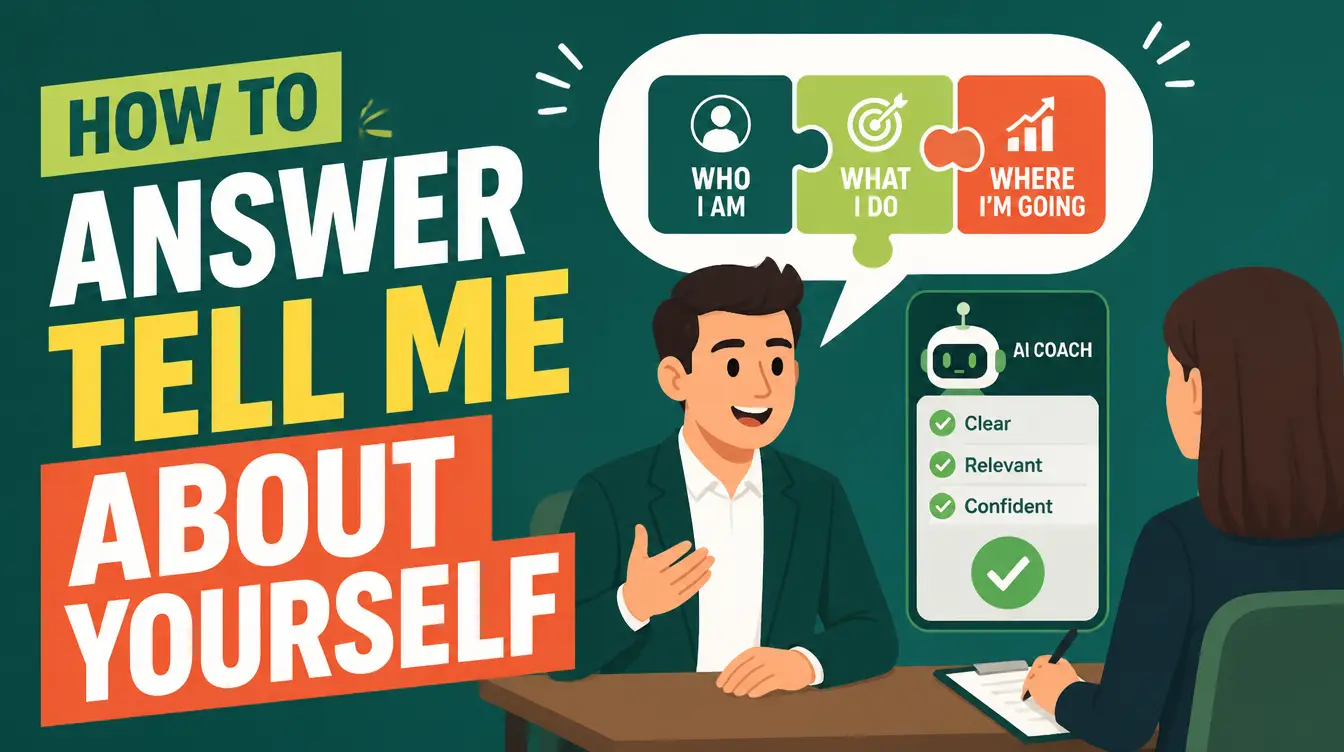
"Tell me about yourself" opens almost every interview, and it is the one question candidates prepare for the least. The mistake is treating it as a biography request: you start at your first job, walk forward year by year, and watch the interviewer's attention leave the room. The question is really an invitation — tell me, in ninety seconds, why the person on paper fits the role in this room. This article gives you the three-part structure that works, the reason rehearsal beats memorization, and a way to practice against an AI mock interviewer until the answer comes out steady instead of scripted. One evening of preparation changes the first two minutes of every interview you sit for.
Everything below assumes a target job in hand. If you are mid-hunt, the wider sequence is in the CV + mock interview workflow — this piece is the deep dive on its opening question.
Why does the first question decide so much?
Because it sets the tone for everything that follows. A crisp, relevant ninety seconds tells the interviewer the rest of the conversation will be organized; a rambling three minutes tells them to expect more of the same. It is also the one question every interviewer asks, which makes it the highest-leverage answer you will ever prepare. Nail it and the follow-up questions arrive easier — the room is already on your side.
What is the interviewer actually asking?
Three smaller questions folded into one. Who are you professionally right now — one sentence, not a decade. What evidence brought you to this table — the two or three achievements that matter for this role. And why does your path point here — the reason this job is the next step rather than any job. An answer that covers all three in order sounds composed. An answer that covers only the middle one sounds like a CV being read aloud.
What does a strong answer sound like?
Three parts, ninety seconds, in this order:
- Now — your professional identity in one sentence: "I'm a data analyst who turns messy sales exports into weekly decisions."
- Proof — two or three achievements, chosen because this role cares about them, each in one sentence with a number in it.
- Direction — one sentence on why this role, specifically, is the natural next step.
The order matters more than the wording. Now establishes the frame, proof earns it, and direction hands the conversation back to the interviewer on a note of relevance. Chronology never enters it — your timeline is already on the page in front of them.
| Weak answer | Strong answer | |
|---|---|---|
| Opening | "I graduated in 2018, and my first job was…" | "I'm a [role] who [one-line identity]." |
| Middle | Every job since graduation, in order | Two or three achievements this role cares about |
| Ending | Trails off at "…and then I applied here" | One sentence: why this role, specifically |
| Length | Three minutes of chronology | Ninety seconds of relevance |
Why does rehearsal beat memorization?
A memorized answer sounds memorized the moment nerves touch it, and it collapses completely when the interviewer interrupts with "why this company?" Rehearsal keeps the structure and lets the words change each time — which is what a real conversation is. You are not learning lines; you are learning three moves until they survive pressure. The difference shows up exactly when it matters: in the room, where memorized text evaporates and a rehearsed structure holds.
How do you rehearse with an AI mock interviewer?
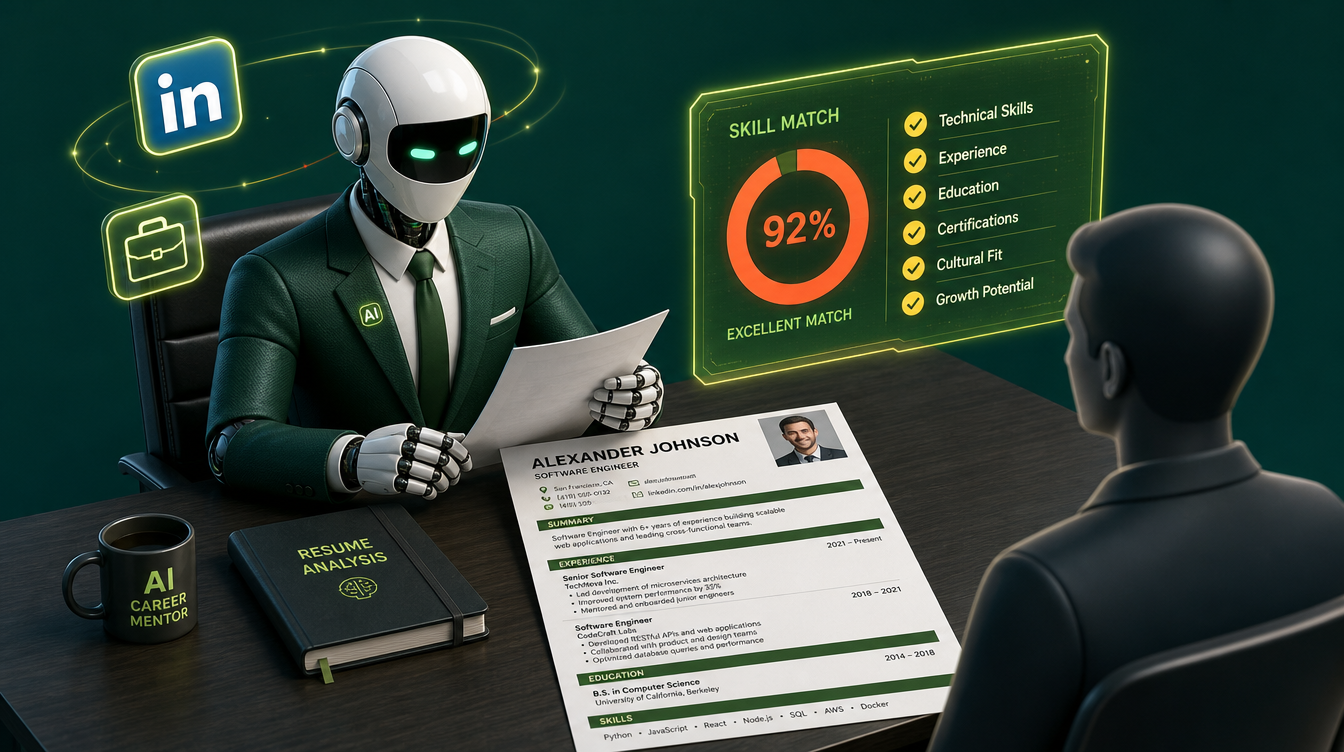
The Arabic Interview Coach skill runs the whole loop: realistic mock interviews, CV reviews, and performance feedback. You hand it your CV and the job description, it plays the interviewer and asks the questions — starting with this one — and when the round ends, the feedback names where you rambled, where you undersold, and what to tighten. It is built for candidates interviewing in Arabic, the environment most interview prep ignores; for English-language interviews, the same loop works with your CV and description in English. Run the round, read the feedback, cut the answer to ninety seconds, run it again. Three rounds and the answer stops sounding written.
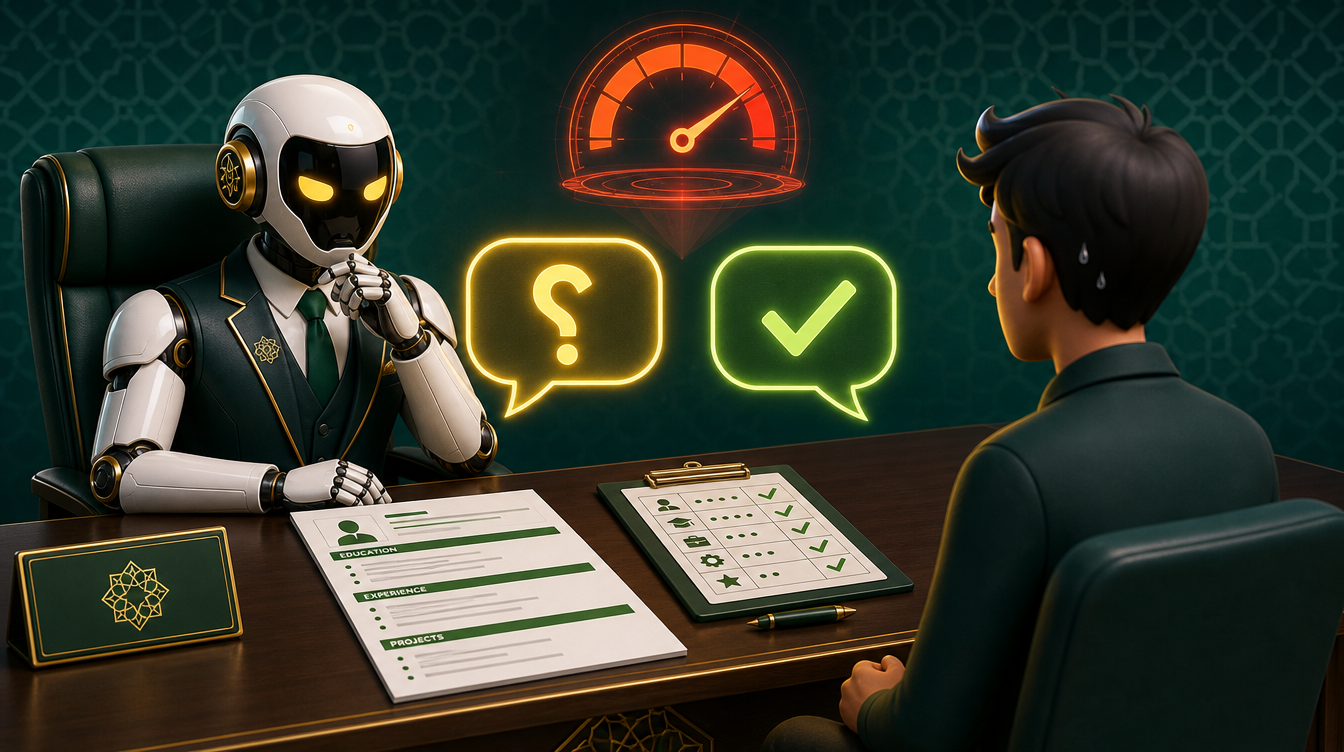
The skill's full walkthrough — the CV review side as well as the interview simulation — is in the Arabic Interview Coach guide. And if your CV itself is still generic, fix that first: the positioning work is what the answer is built on, and CareerLens, the AI CV coach, is the skill that does it.
What should you practice after the opener?
The questions that end interviews, because they carry numbers: your salary expectation, your notice period, your reason for leaving. The same role-play rehearsal handles them. The salary round deserves its own session — the playbook is how to negotiate your salary with AI role-play — and if two offers land at once, the structured comparison lives in how to compare two job offers with AI.
Interviewers remember the first ninety seconds and the last question. Prepare both, and the middle takes care of itself.
How much does this practice cost?
The Arabic Interview Coach and CareerLens are free on Mahara AI. Paid skills on the platform start at 499 EGP (about $10), there is a 499 EGP per month claim-and-keep subscription, and every purchase carries a 7-day refund.
FAQs
What should I say when asked to tell me about myself?
A ninety-second answer in three parts: your professional identity in one sentence, two or three achievements this specific role cares about, and one sentence on why this job is your natural next step. Relevance beats chronology every time.
How long should my answer be?
About ninety seconds. Long enough to carry one sentence of identity, two or three proof points, and a direction; short enough that the interviewer keeps listening instead of planning their next question.
Should I memorize my answer?
No. Memorize the structure — now, proof, direction — and let the wording change with each rehearsal. Memorized text collapses under interruption; a rehearsed structure survives it.
Can I practice interviews with AI?
Yes. The Arabic Interview Coach runs realistic mock interviews from your CV and the job description, then returns performance feedback. Three rounds, tightening between each, is enough to make the opener steady.
Is the practice free?
Yes, the Arabic Interview Coach and CareerLens are free on Mahara AI. Paid skills start at 499 EGP (about $10), with a 499 EGP per month claim-and-keep subscription and a 7-day refund on every purchase.
There is an interview on your calendar, and it will start with this question. Open the Mahara AI skills library, put your CV and the posting in front of the Arabic Interview Coach tonight, and walk in with the first ninety seconds already yours.