Negotiating your salary with AI role-play is the closest thing to a rehearsal room for the highest-stakes conversation of your career. Most people lose money in salary negotiations not because they lack leverage, but because the first time they hear the words "that number is above our budget" is in the real meeting, with a real paycheck on the table. Two Mahara AI skills fix that: CareerLens builds your value case, and the Arabic Interview Coach plays the other side of the table and scores your answers. This guide shows how to run the full rehearsal — positioning, practice, feedback, iteration — in one evening, in Arabic or English, before you ever sit down with HR.
This is the negotiation chapter of the workflow we mapped in the CV and mock interview guide — same skills, aimed at the money conversation.
Why do most salary negotiations fail?
Because people negotiate live, for the first time, under pressure. A negotiation is a performance, and nobody performs well unrehearsed: you accept the first number, or you freeze on the counter, or you get emotional defending a figure you cannot explain. The fix is deliberate practice — the same method actors, pilots, and athletes use — with a scene partner who plays the employer realistically and then tells you exactly where you were weak.
| Preparation method | Realism | Feedback quality | Cost of failure |
|---|---|---|---|
| Winging it | High stakes, zero rehearsal | None — you learn from the outcome | Months of lost income |
| Practicing with a friend | Low — a friend pulls punches | Comforting, not objective | False confidence |
| AI role-play with a skill | High — the skill plays a professional hiring manager | Objective scoring of every answer | Zero — repeat the scene as often as you want |
What does CareerLens do for the negotiation?
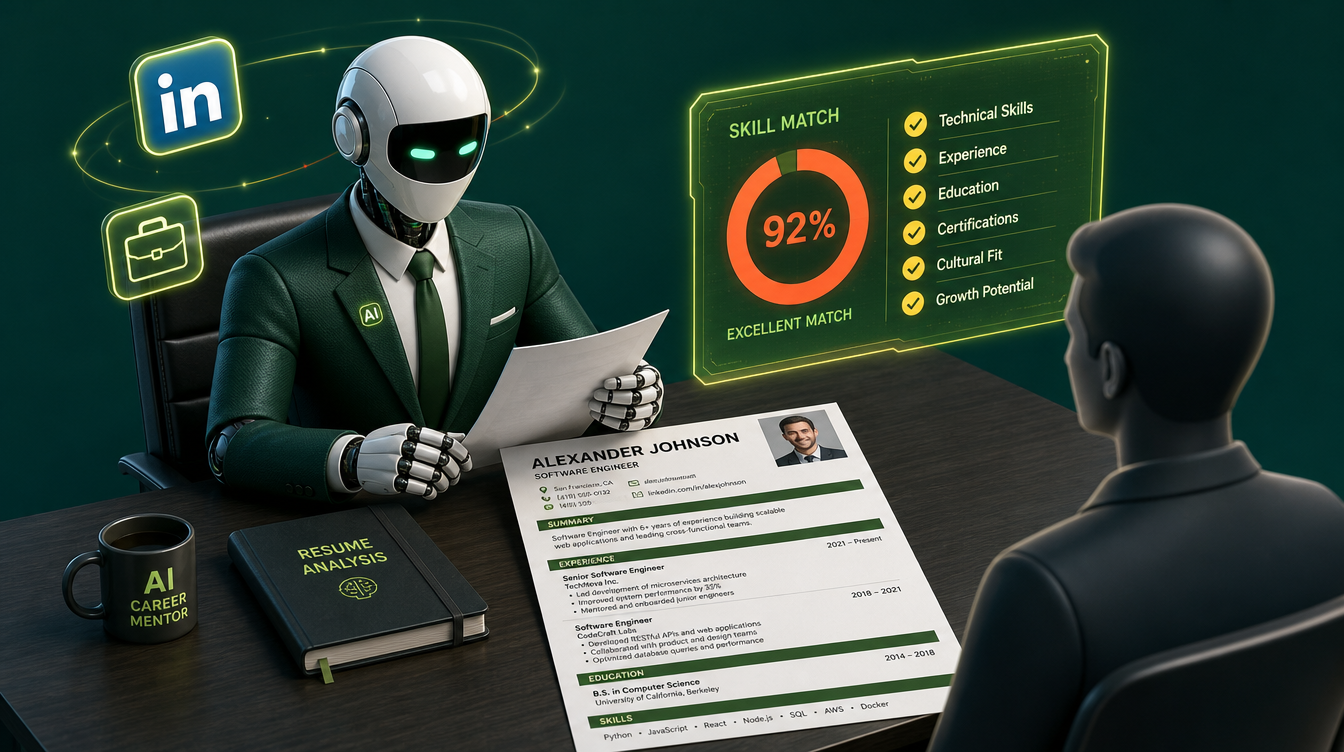
It builds the case you will negotiate with. CareerLens is a career coaching skill that combines the expertise of a senior HR consultant, an executive recruiter, and a career strategist into one session — and it works by real conversation, not by pasting your content into a template. Before the negotiation, it helps you convert your experience from job descriptions into measurable achievements, position you for the specific role, and phrase your value in language that works on both ATS filters and human hiring managers. A number you can defend is a number you can ask for.
The full walkthrough is in the CareerLens CV coach guide — the negotiation work is the last mile of the positioning it starts.
How does the role-play itself work?
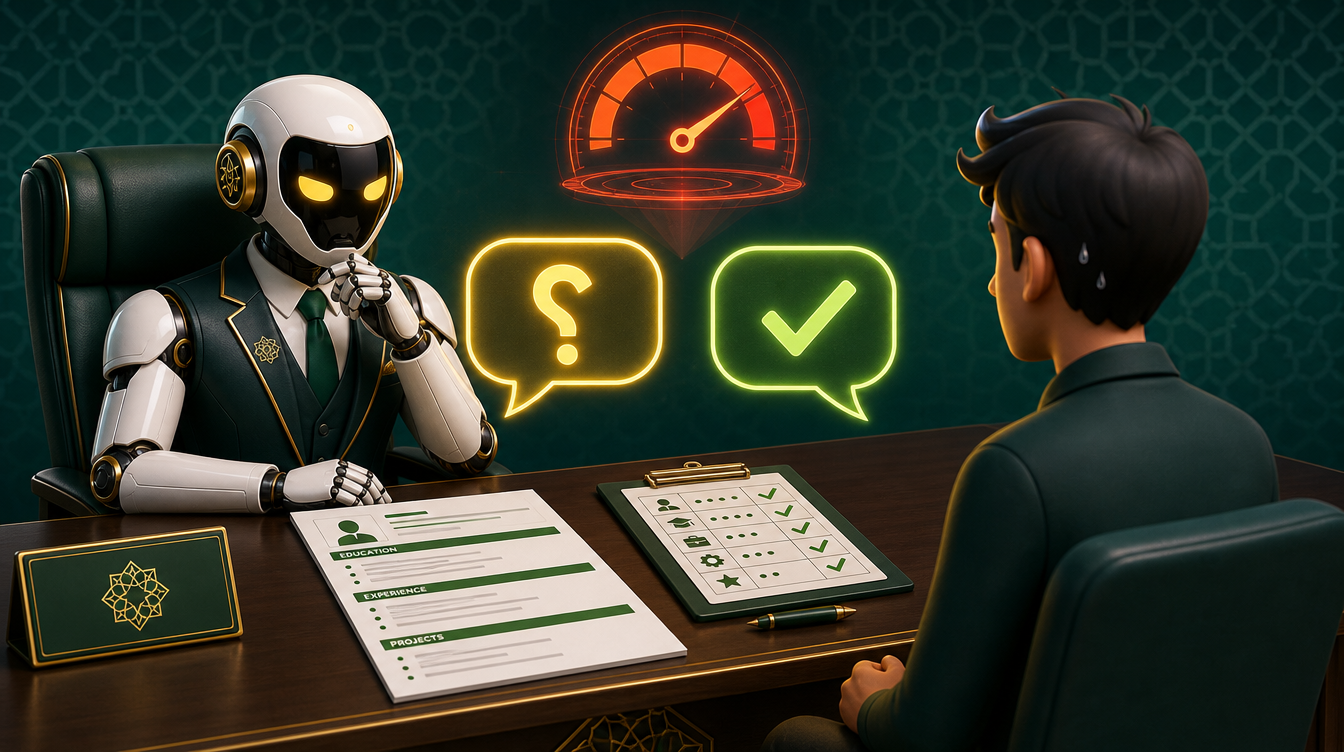
The Arabic Interview Coach skill is a full end-to-end interview simulator that acts as a professional hiring manager. Trigger it with any interview prep request — a mock interview, question practice — and it runs the scene in Modern Standard Arabic by default, switching to English the moment you ask. It does not go easy on you: it evaluates objectively and pushes you to show your best potential. For salary negotiation, you set the scene — the offer is on the table, the budget objection is coming — and you practice hearing pressure without folding under it.
We introduced the skill in the Arabic Interview Coach deep dive; the negotiation scene is simply a mock interview where the only question is the number.
You do not rise to the occasion of a negotiation. You fall to the level of your rehearsal. Rehearse with something that scores you honestly.
How do you run the full negotiation rehearsal?
- Open CareerLens and build your value case: measurable achievements, target-role positioning, and the language for your top three wins.
- Set your number — the ask, the walk-away, and the number you say out loud when they flinch.
- Open the Arabic Interview Coach and set the scene: salary negotiation for your target role, in Arabic or English.
- Run the scene. Let it push back — the budget objection, the "other candidates" pressure, the silence after your number.
- Read its evaluation, fix the two weakest answers, and run the scene again until the strongest version of your answer is also your most natural one.
What should you practice saying?
Three moments decide the outcome. First, the anchor: state your number as a researched range attached to your achievements, not as an apology. Second, the objection: when they say the budget is fixed, answer with value, not volume — one specific result you delivered that pays for the difference. Third, the silence: after you counter, stop talking. The skill's evaluation will flag every place you filled silence with a discount.
Does this replace a real negotiation coach?
No — it replaces going in unprepared. A human coach brings market nuance for senior and executive packages; the skills bring unlimited, objective, pressure-tested rehearsal at a fraction of the cost, tonight. If the outcome moves your salary even slightly, the skills have already outrun their price tag.
FAQs
Can AI help me negotiate my salary?
Yes, as a rehearsal partner. CareerLens builds your value case from measurable achievements, and the Arabic Interview Coach plays the hiring manager across the table, pushing back with realistic pressure and evaluating your answers objectively.
Does salary role-play actually work?
Rehearsal works because negotiations fail on performance, not information. Practicing the anchor, the objection, and the silence — then receiving objective scoring — means the real meeting is your third run of the scene, not your first.
Can I practice in Arabic?
Yes. The Arabic Interview Coach runs in Modern Standard Arabic by default and switches to English on request, so you can rehearse in the language the negotiation will actually happen in.
How much do these skills cost?
Some skills on Mahara AI are free. Paid skills start at 499 EGP (about $10 USD), there is a 499 EGP per month claim-and-keep subscription, and every purchase carries a 7-day refund.
When should I start rehearsing?
The day you are invited to the final interview. The offer conversation follows fast, and a rehearsed candidate negotiates calmly while an unrehearsed one negotiates in adrenaline.
The next offer you receive will be the highest-leverage five minutes of your year. Browse the Mahara AI skills library and rehearse them before they happen.