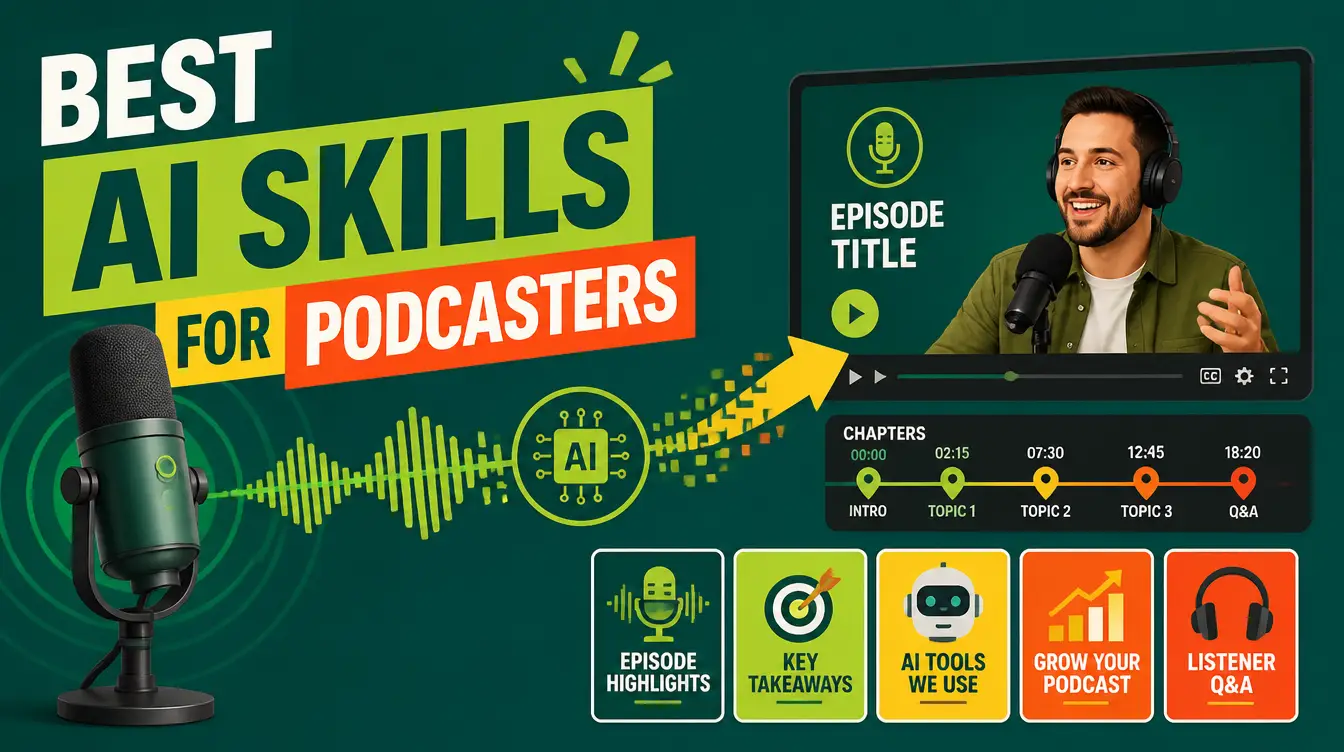
Podcasting has a production problem disguised as a discovery problem. The episode gets recorded — and then one recording has to become titles, descriptions, chapters, show notes, social clips, and maybe a video version, every single week, by a team of one. The best AI skills for podcasters attack exactly that pipeline: one skill produces a complete YouTube SEO package for every episode, a second turns episode material into finished narrated video, and a third writes show notes and articles that never invent a quote. All three are free on Mahara AI, and together they turn one recording into a week of publishable material.
New to the model? A skill is an instruction bundle that gives an AI agent like Manus or Claude a complete methodology. What is an AI skill? explains it in two minutes. Then the three skills, in pipeline order.
Which parts of podcast production eat the week?
Run the audit honestly and it is almost never the recording. It is everything after it:
| The job | The skill | What it delivers |
|---|---|---|
| Episode titles, description, chapters, tags | YouTube SEO Skill | A copy-paste-ready package: 3 hook-laden titles, full description template, SEO chapter timeline, up to 15 hashtags |
| Turning episode material into video | Vox-Style Motion Graphics | A finished narrated explainer video — research, script, animated clips, voiceover, assembled MP4 |
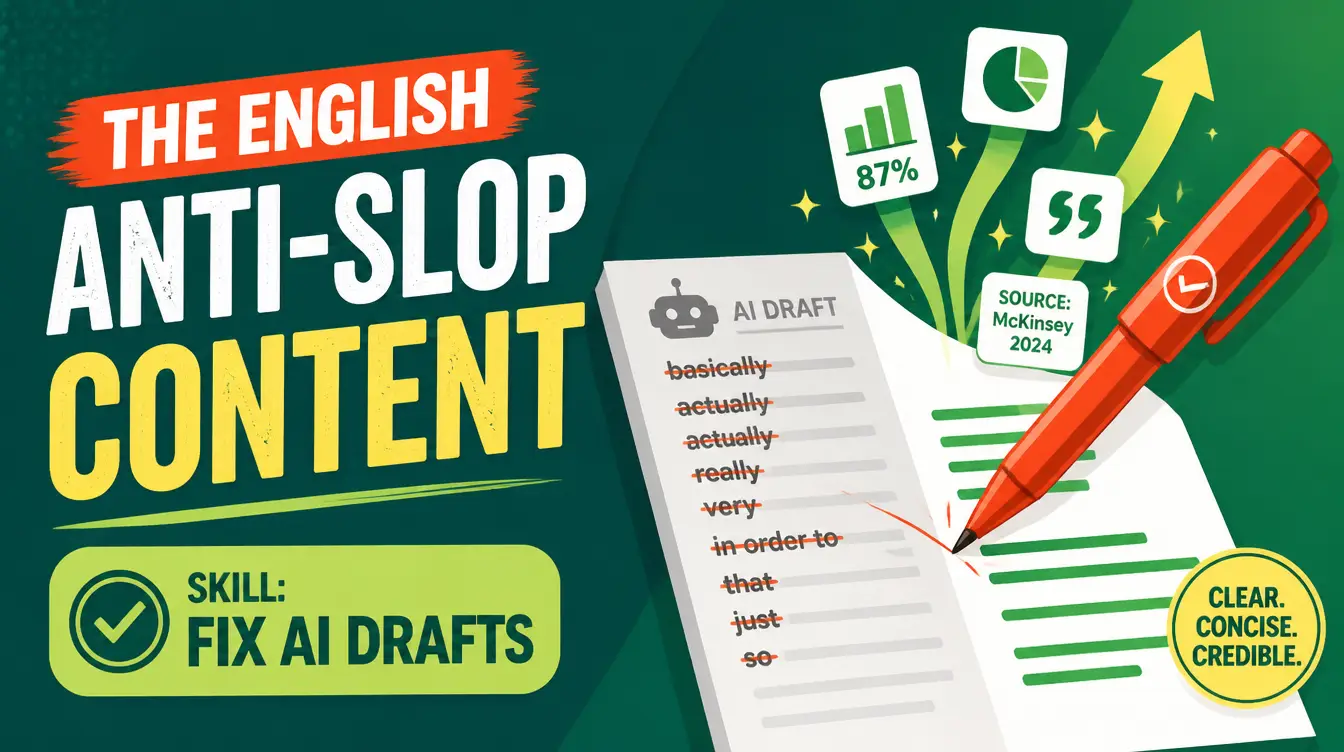
| Show notes and articles without fabrication | Anti-AI-Slop Content Creator | Platform-tuned writing that never invents a statistic, study, or quote |
How does one episode become a full SEO package?
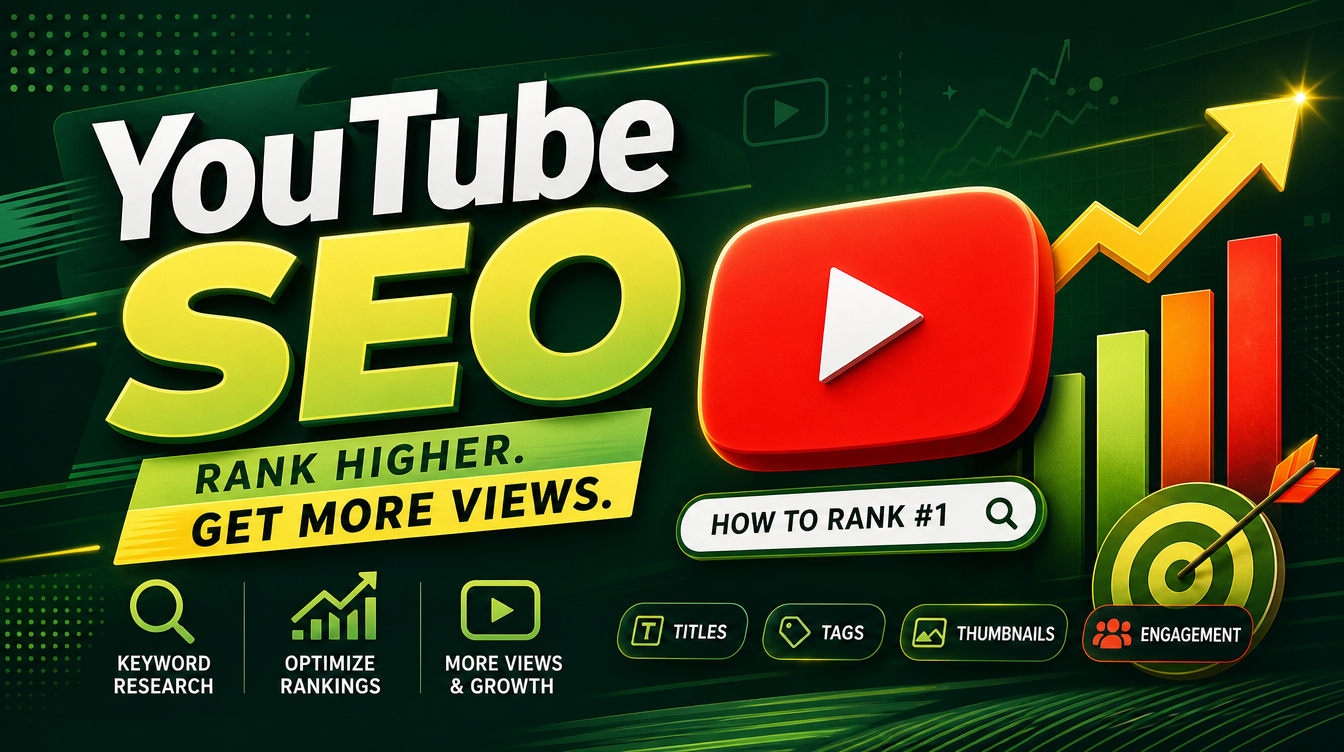
If your podcast is on YouTube — and audio-first shows live there too — every episode needs the same packaging a video does. The YouTube SEO skill delivers the whole package per episode: keyword research across four quadrants (branded and non-branded, long-tail and short-tail, with Arabic and English guidance), three optimized titles with different psychological hooks and the keyword front-loaded, a full description template with the hook first, an SEO chapter timeline, related videos, links, an FAQ block, and up to 15 hashtags. It remembers your channel's defaults from one episode to the next and asks only for what is missing — which is what makes a weekly cadence survivable. It works in Arabic, English, or mixed, which is the reality of most MENA podcasts. Start with the YouTube SEO skill guide, then go deeper on how chapters get built and which titles get clicked.
Where does a video version come from?
The Vox-Style Motion Graphics skill turns one request into a finished narrated explainer video: research, script, animated collage clips, documentary voiceover, and one assembled MP4. It comes in two house styles — Mixed Media collage for flat, bright, editorial pieces, and a cinematic paper-diorama documentary style for heavier topics — and both matter for podcasters for the same reason: your episode's best five minutes can become a standalone video that brings new listeners back to the full episode. Data stories, explainers, and shorts are explicitly what the collage style is built for. The full walkthrough is the Vox-style motion graphics guide.
A podcast episode that gets packaged is ten pieces of content. An episode that does not is one audio file hoping to be found.
Who writes the show notes — and why does the skill's honesty matter?
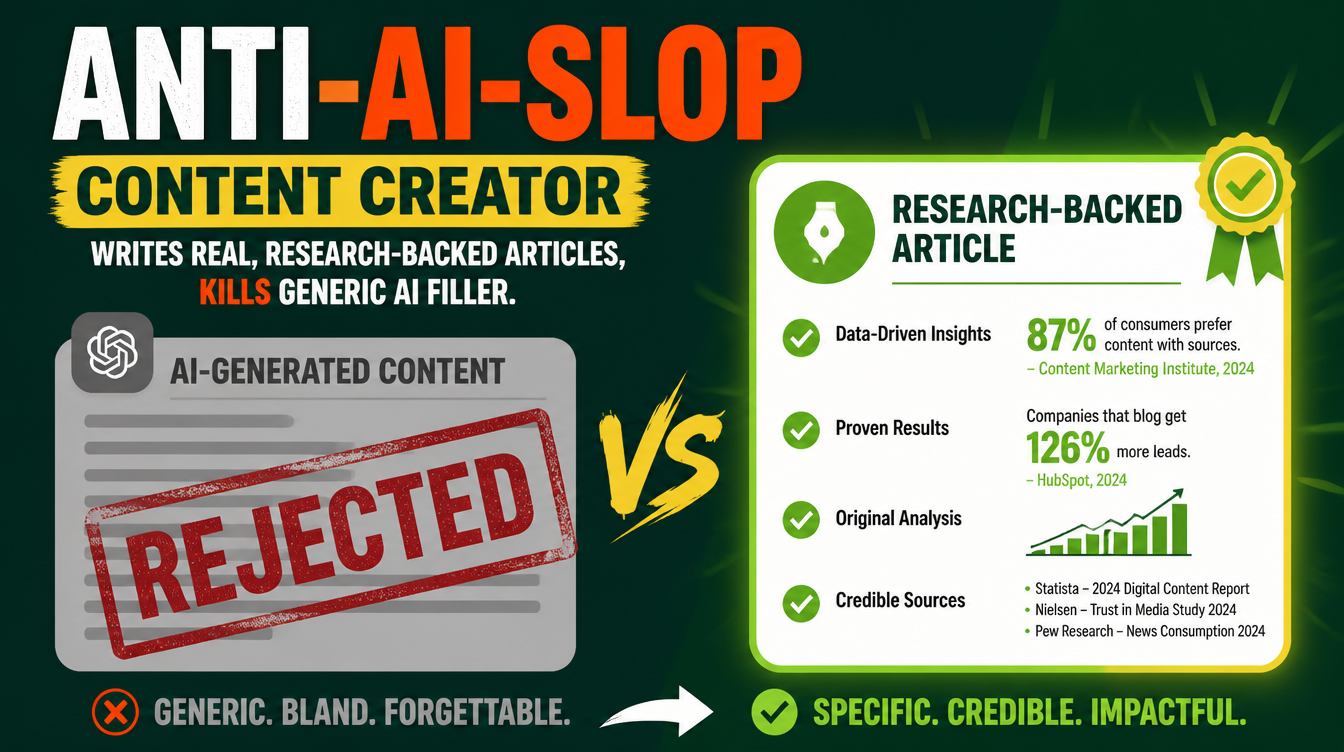
Show notes are where most AI-assisted podcast workflows quietly rot: the model summarizes from memory, pads with generalities, and occasionally puts a statistic in your mouth that nobody on the episode ever said. The Anti-AI-Slop Content Creator skill is built against exactly that. Its rules are absolute: never invent a statistic, study, quote, or citation — if reliable data does not exist, it says so; never pad length; never write a headline the content does not pay off. It tunes structure per platform — including hook-first scripting for YouTube — and runs a self-review checklist before delivery. For show notes, episode articles, and guest-piece promotion, that discipline is the difference between notes readers trust and notes they smell. The writing methodology is unpacked in the anti-slop writing guide.
What is the weekly pipeline?
Record once. Run the YouTube SEO package the same day while the episode is fresh. Generate the video clip for the strongest segment. Write show notes and the episode article with the anti-slop skill — from the transcript, never from the model's memory. Publish everything before the next recording. Creators running wider channels will find more of the stack in the AI skills for content creators guide.
FAQs
What are the best AI skills for podcasters?
Three free ones on Mahara AI: the YouTube SEO skill for per-episode titles, descriptions, chapters, and tags; the Vox-Style Motion Graphics skill for finished narrated videos from episode material; and the Anti-AI-Slop Content Creator for show notes and articles that never invent quotes or statistics.
Do these skills work for audio-only podcasts?
Yes. The packaging — titles, descriptions, chapters, show notes — applies to audio episodes on YouTube and podcast platforms alike, and the video skill turns episode segments into standalone clips that promote the audio show.
Can the skills handle Arabic and English episodes?
Yes. The YouTube SEO skill works in Arabic, English, or mixed, with dual-language keyword guidance, and the anti-slop skill writes without the translated-language tells that mark machine-written Arabic.
How much do these podcasting skills cost?
All three are free on Mahara AI. Paid skills on the platform start at 499 EGP (about $10 USD), there is a 499 EGP per month claim-and-keep subscription, and every purchase carries a 7-day refund.
Will AI write things my guests never said?
Not the anti-slop skill — refusing to invent quotes, statistics, and citations is one of its built-in rules. It works from your episode transcript and says what is known and what is not, which is exactly what show notes require.
One recording deserves ten outputs. Download the three skills, package this week's episode tonight, and let the back catalog start working.