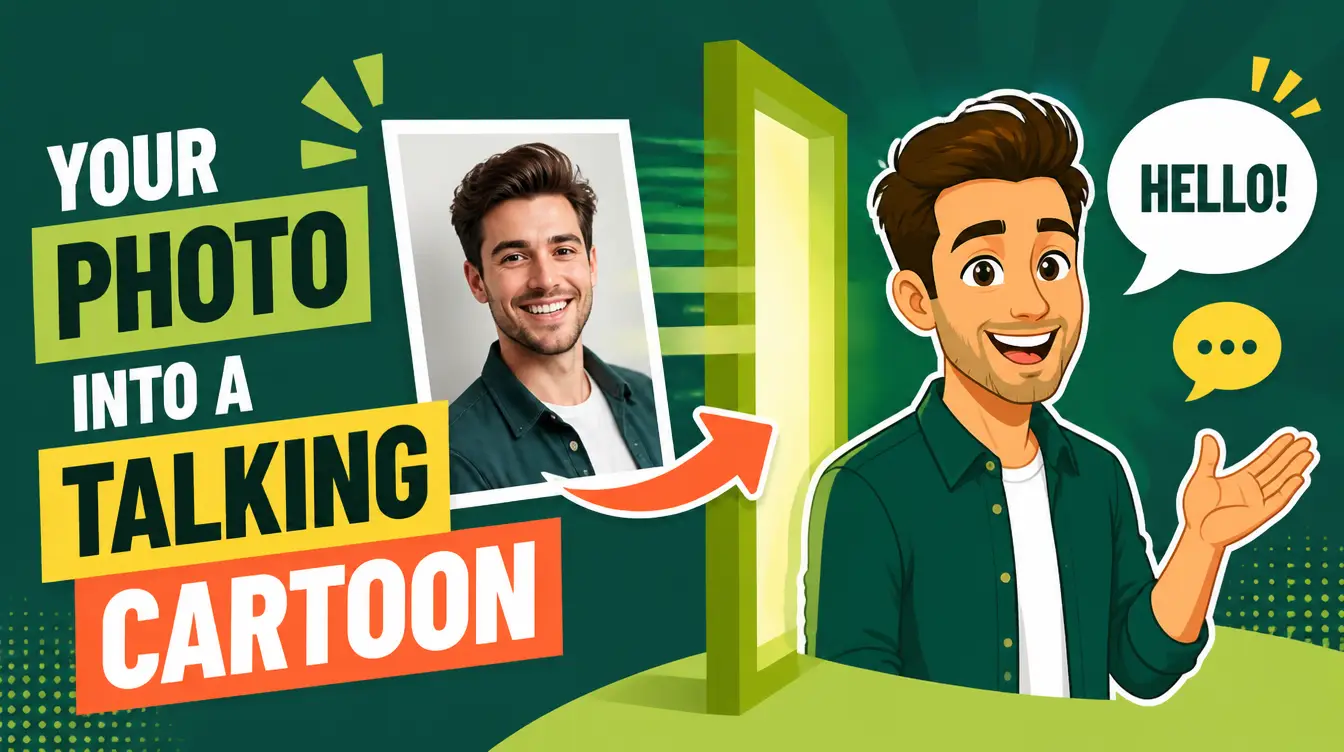
Faceless channels have a problem and on-camera creators have the opposite one: the first group is invisible, the second group is exhausted. The Talking Character skill solves both with one input: a single photo of you. It creates a consistent 2D cartoon version of you — one that talks, gestures, and stars in a finished vertical reel with lip-synced dialogue, a script built for retention, free dual Egyptian voices, and animated step cards. You film nothing. The character is recognizably you, it never has a bad skin day, and it shows up every single time you need content. The skill is free on Mahara AI.
New to skills? What an AI skill is covers the format in two minutes. Then meet your cartoon.
What is the Talking Character skill?
Talking Character — Your Photo into a Cartoon That Speaks is a free, Manus-compatible AI skill that turns one photo into a consistent 2D cartoon character that talks. The pipeline runs from photo analysis through cartoon generation, dialogue scripting, dual voices, lip-sync, and scene assembly into a finished vertical reel. It was curated by Mostafa Hassan (خبير اونلاين), with credits to Hossamudin Hassan — Mahara AI. The design goal is consistency: the same character every time, drawn once from your photo, reused across every video you make.
How does one photo become a talking cartoon?
Through a pipeline that treats your face like a brand guide:
| Stage | What the skill does | Why it matters |
|---|---|---|
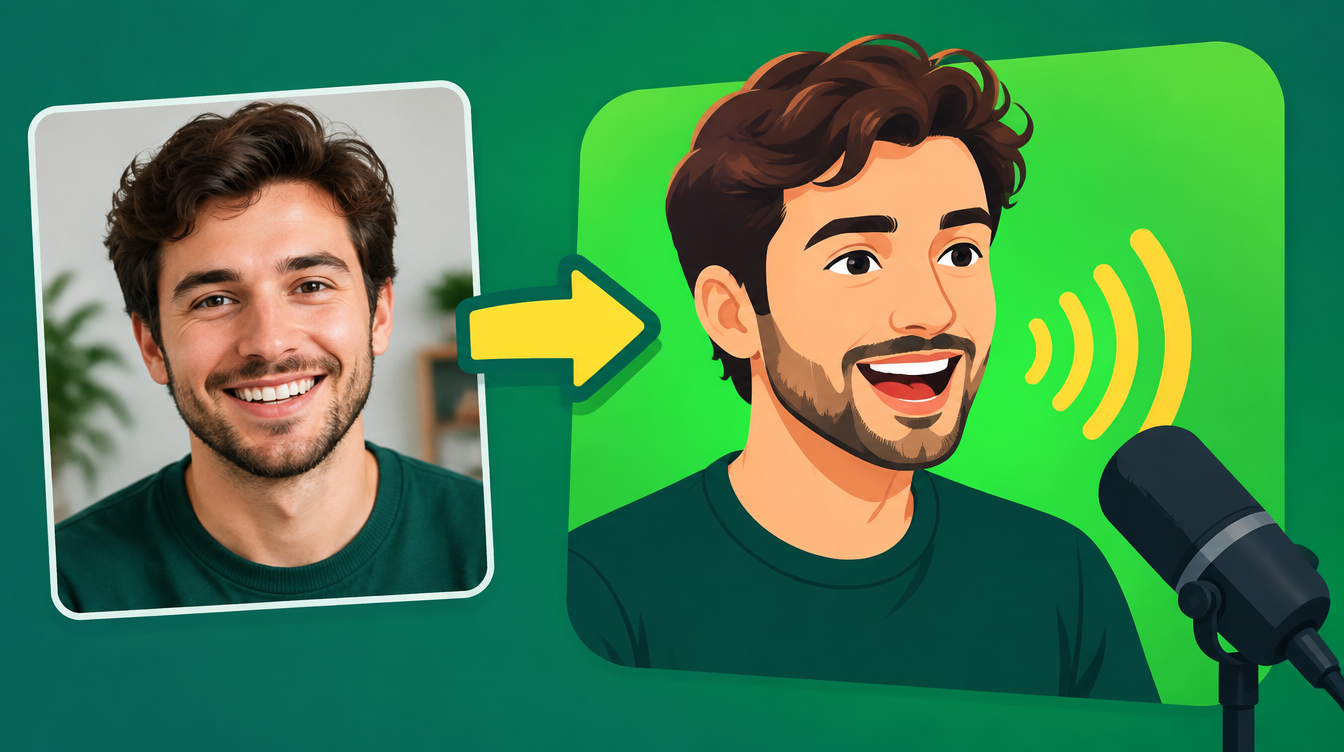
| Photo analysis | Reads face shape, glasses, hair, clothes — and locks 3 signature details that never change | Your character stays recognizable across every reel |
| Cartoon | Flat 2D vector style on pure chroma green, with a turnaround sheet: front, three-quarter, side, back | Green screen means the character drops into any scene; the turnaround means any angle |
| Script | A 60–110 second dialogue between you (H) and an AI helper (C) — hook, steps, an honest moment, CTA | The two-voice format carries attention twice as far as a monologue |
| Voices | Free dual Egyptian voices — Shakir and Salma — recorded in steady multi-line takes | No voice drift, no paid accounts |
| Lip-sync | Wan 2.7 with audio references, or a free mouth-flap mode driven by voice energy analysis | Precise sync when you have the tool; convincing sync when you do not |
| Scenes | HyperFrames template: presenter video, AI helper with envelope-driven mouth, speech bubbles, step cards, relay animation | The conversation looks produced, not pasted together |
Why a dialogue and not a monologue?
Because two voices create a show and one voice creates a lecture. The skill scripts your character (H) in conversation with an AI helper (C) — the helper asks what your viewer is thinking, your character answers with the actual value. The structure is built for retention: a hook up front, steps in the middle, an honest moment where the limits get admitted, and a call to action at the end. That honest moment is not decoration — it is the same anti-slop instinct that runs through the Mahara library: a video that admits what it cannot do keeps trust, and trust keeps viewers.
The internet does not need another flawless presenter. It needs yours — and yours happens to be a cartoon that never reschedules, never needs lighting, and never quits after episode three.
What happens when the voice is not good enough?
The skill tells you. Its honesty rule is explicit: if the cloned voice is not close enough to yours, it says so and uses a clean stock voice instead — it never claims a result the pipeline did not produce. That rule is rarer than it should be in AI tooling, and it is the difference between a tool you trust with your channel and one you audit after every export. The default path is the free dual Egyptian voices anyway, which sidestep the question entirely.
Who is this skill actually for?
Three groups, mostly. Creators who are camera-shy but whose audience connects with a face — the cartoon is a face, at one remove. Established creators who want to scale output without scaling filming days. And small brands that need a consistent presenter across explainers, promos, and support content without hiring talent. If you are mapping a whole content operation, this slots into the AI skills for content creators guide as the "presenter" layer; social teams will find it fits the social media managers stack the same way.
How does it fit with the other video skills?
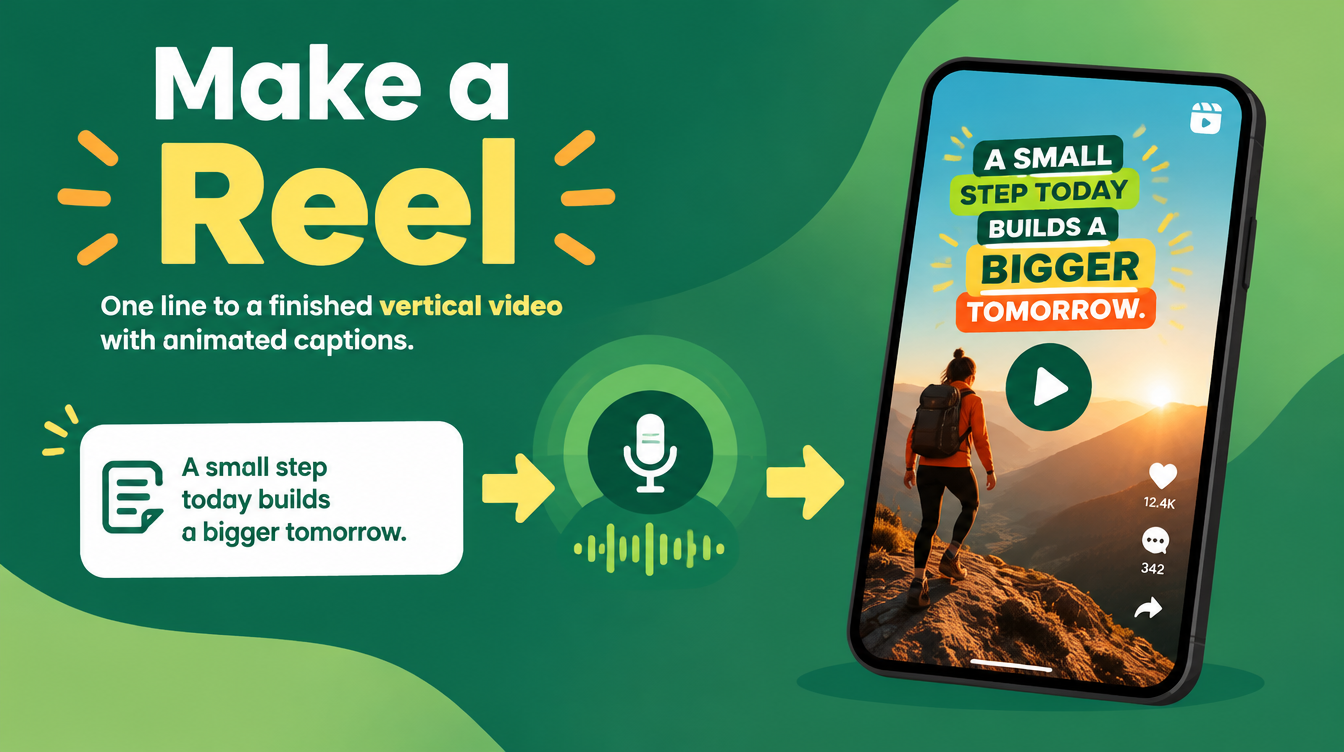
The cartoon presenter is one format in a family. Make a Reel handles the one-line, paper-style reel; Talking Character replaces the paper with you — or with your cartoon, which is you on your best day. Once the reel is exported, the packaging layer takes over: for the YouTube version, titles that earn the click matter as much as the video itself. The division of labor is clean: this skill makes the presenter; the others make the machine around the presenter.
FAQs
What is the Talking Character skill?
Talking Character is a free, Manus-compatible AI skill that turns one photo of you into a consistent 2D cartoon character that talks with lip-sync — including a turnaround sheet, a 60–110 second dialogue script, free dual Egyptian voices, and a finished vertical reel.
Is the Talking Character skill free?
Yes — it is free on Mahara AI. Paid skills on the platform start at 499 EGP (about $10 USD), there is a 499 EGP per month claim-and-keep subscription, and every purchase carries a 7-day refund.
Do I need to record my own voice?
No. The default path uses the free dual Egyptian voices Shakir and Salma, recorded in steady multi-line takes to avoid voice drift. If you use voice cloning and the result is not close enough to yours, the skill says so and falls back to a clean stock voice rather than pretending.
Does the cartoon stay consistent across videos?
Yes — that is the core of the design. The photo analysis locks three signature details that never change, and the cartoon ships as a turnaround sheet on pure chroma green (front, three-quarter, side, back), so the same character keys into any scene from any angle.
Do I need a lip-sync tool?
Not necessarily. The skill supports Wan 2.7 with audio references for precise synchronization, but it also includes a free mouth-flap mode that drives the mouth from voice energy analysis — no lip-sync tool required.
Your audience wants a face they can recognize. Claim the Talking Character skill — free — and give them one that never misses a recording day.