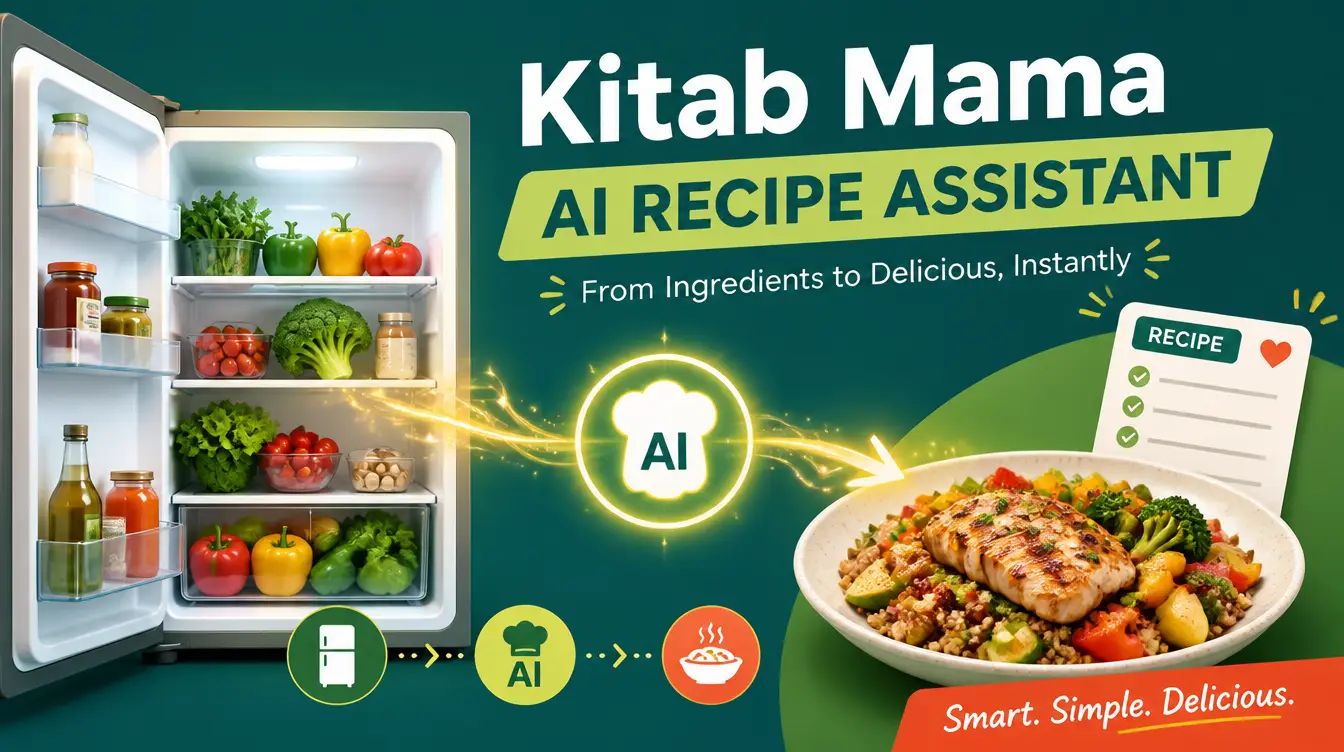
It is 7 PM, you are staring into the fridge, and the answer to "what is for dinner?" is somehow both everything and nothing. The Kitab Mama skill was built for exactly this moment. It is a free AI skill that takes the ingredients you actually have and turns them into a complete recipe — step-by-step instructions, nutritional values, and a printable kitchen PDF — in one conversation.
If the idea is new to you, an AI skill is a downloadable bundle of instructions that teaches an assistant like Claude or Manus to do one job properly. Kitab Mama is one of the most immediately useful ones in the Mahara AI library, and it sits comfortably next to the other time-savers in 5 free AI skills that save you hours every week.
What exactly does the Kitab Mama skill do?
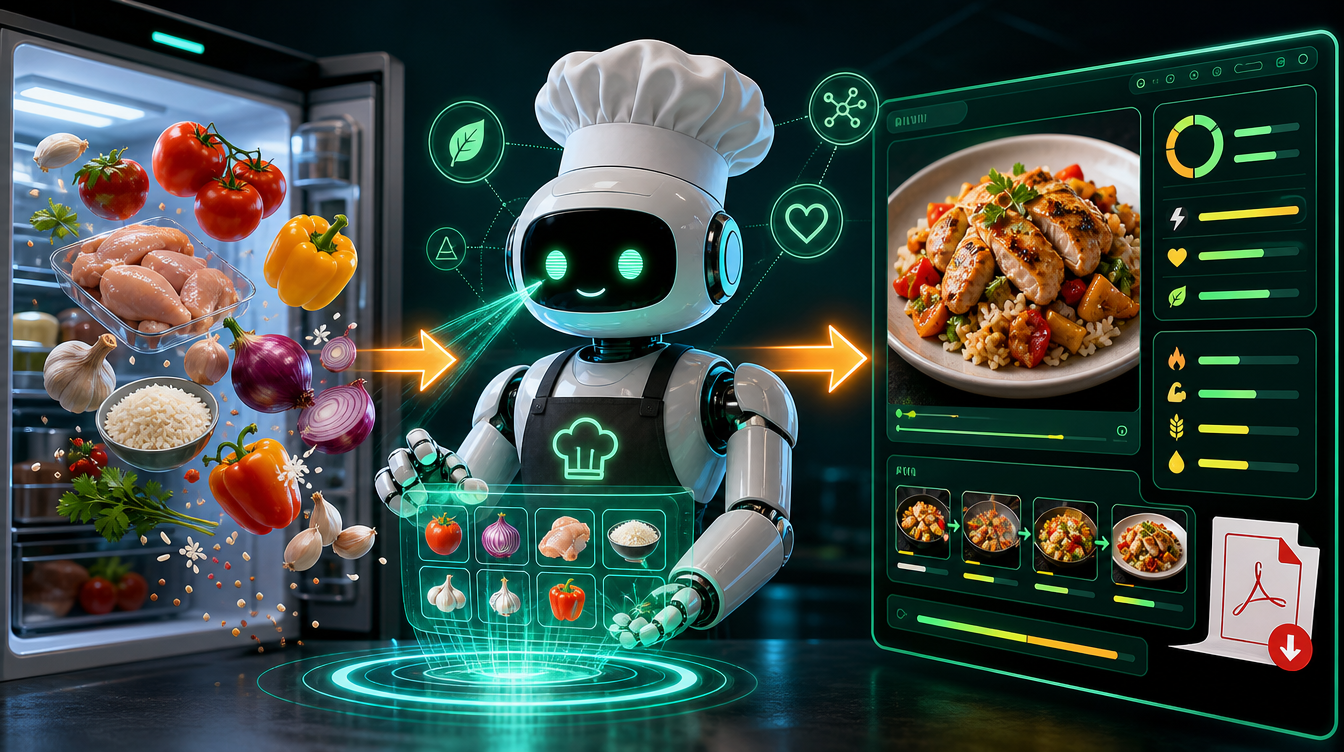
Kitab Mama converts a list of whatever is in your fridge into a finished, cookable recipe. You tell it what you have — half a chicken, three tomatoes, a cup of rice, some yogurt — and it generates a full recipe built around those ingredients, with step-by-step instructions, nutritional values per serving, and a printable PDF you can stick on the fridge or carry to the stove. It is not a search engine that finds someone else's recipe; it composes one around your actual ingredients.
How does it go from fridge list to dinner?
You list what you have. No measuring required — rough quantities and leftovers count.
You state any constraints: cuisine mood, dietary restrictions, time. Vegetarian, halal, gluten-free, and low-calorie requests are all understood natively.
The skill composes the recipe — title, ingredient quantities, ordered steps, and cooking times.
It adds the nutritional breakdown per serving, so you know what the plate costs your day.
It packages everything as a printable kitchen PDF, and can optionally generate an AI photo of the finished dish so you know what you are aiming at.
Which cuisines and diets does it handle?
The skill is strongest where most recipe apps are weakest: the cuisines people in this region actually cook. Egyptian, Levantine, and Gulf dishes are first-class citizens, alongside Italian and more. Dietary awareness is built in rather than bolted on.
| What you specify | What the skill does with it |
|---|---|
| Fridge ingredients | Builds the recipe around what you have, not what a blog assumed |
| Cuisine (Egyptian, Levantine, Gulf, Italian…) | Matches flavors, techniques, and dish structure to that tradition |
| Diet (vegetarian, halal, gluten-free, low-cal) | Filters ingredients and substitutions before writing a single step |
| Time and servings | Scales quantities and picks techniques that fit the clock |
The difference between a recipe search and Kitab Mama is the difference between browsing a library and asking a cook who is standing in your kitchen, looking at your shelves.
What do you actually receive at the end?
Four deliverables, one conversation. A complete recipe with exact quantities and ordered steps. A nutritional values table per serving. A printable PDF formatted for the kitchen — the kind you can prop against the toaster without a screen locking mid-stir. And, optionally, an AI-generated photo of the dish, which sounds like a luxury until you realize how much easier a recipe is to follow when you have seen the target.
How is this different from a recipe website?
A recipe website starts from the dish and expects you to shop for it. Kitab Mama starts from your fridge and expects nothing. That inversion kills the two biggest weeknight failure modes: discovering you are missing ingredient number seven, and abandoning the plan for delivery. It also compounds with other skills — once you know tonight's recipe, the Best Price Finder skill can hunt down the best deal on whatever you are missing for tomorrow's.

Who gets the most out of it?
Parents answering the daily dinner question under time pressure. Students with a half-stocked kitchen and a full-stocked appetite. Anyone cooking for a mixed-diet household — one vegetarian, one low-calorie, one child who eats like a food critic. And anyone who has ever thrown away vegetables they meant to use: cooking from the fridge first is the quietest way to cut a grocery bill, the same kind of practical automation we describe in how AI skills automate your daily work.
How do you get started?
Download the skill from Mahara AI — it is free — and load it into your assistant. If you have never installed one, our step-by-step download guide takes about two minutes. Then open a conversation, type what is in your fridge, and dinner stops being a question.
FAQs
What is the Kitab Mama skill?
A free AI skill that turns the ingredients you have into a complete recipe — step-by-step instructions, nutritional values, and a printable kitchen PDF — built around your fridge rather than a shopping list.
Which cuisines does Kitab Mama support?
Egyptian, Levantine, Gulf, Italian, and more. You name the cuisine mood and the skill matches flavors, techniques, and dish structure to that tradition.
Does it handle dietary restrictions?
Yes. Vegetarian, halal, gluten-free, and low-calorie requests are understood natively, and the skill filters ingredients and substitutions before writing the recipe.
What do I get besides the recipe text?
A nutritional breakdown per serving, a printable kitchen PDF, and — optionally — an AI-generated photo of the finished dish.
Is the Kitab Mama skill free?
Yes, it is one of the free skills on Mahara AI. Download it, load it into an assistant like Claude or Manus, and start with whatever is in your fridge tonight.
Dinner is already in your fridge — it just has not been assembled yet. Browse the Mahara AI skills library, download Kitab Mama, and let tonight's ingredients introduce themselves.