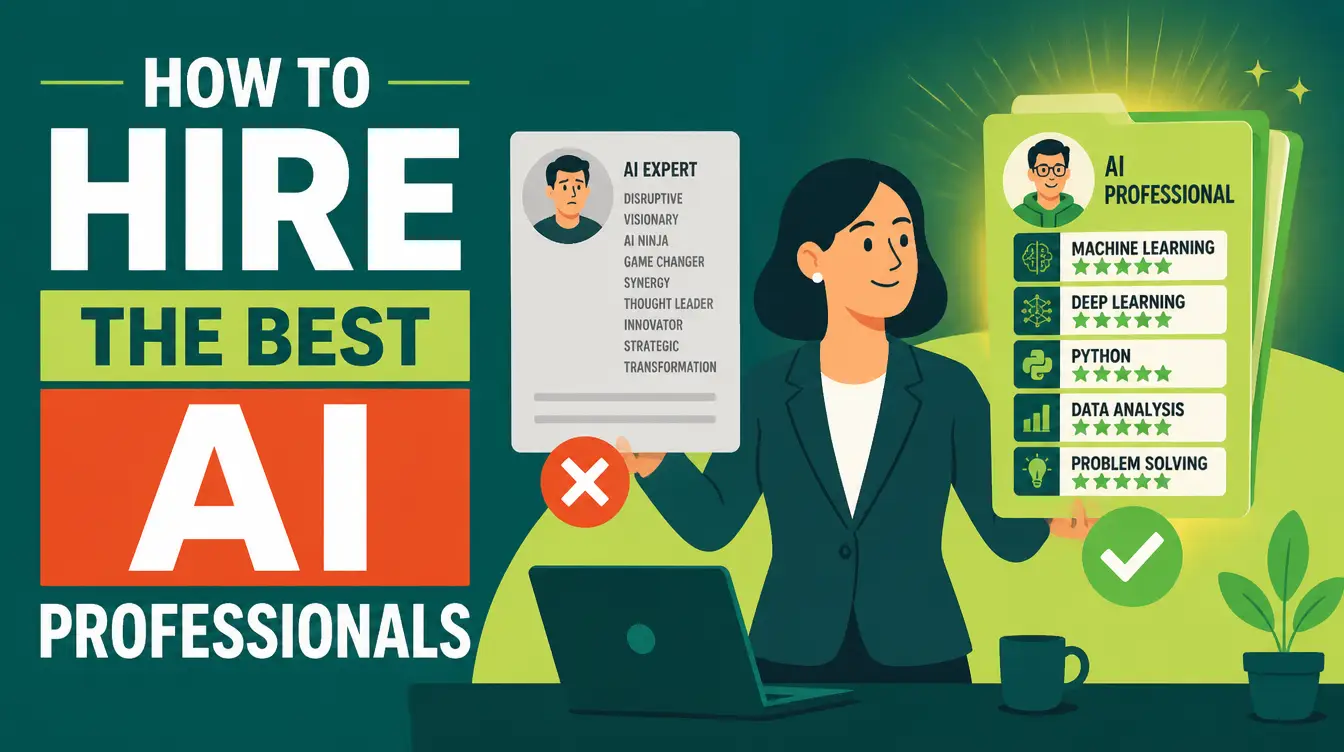
Every résumé in 2026 says the same thing: "AI expert." Prompt engineering, agents, automations, LLM integration — the words are free, so everyone claims them. If you are trying to hire the best AI professionals, you cannot screen on vocabulary. You screen on shipped work. The single strongest signal available today is also the simplest to ask for: "Show me a skill you built." Here is the framework we would use to hire — and the red flags that end interviews early.
Why do skills tell you more than résumés?
A skill is packaged expertise: a SKILL.md core plus references, templates, and scripts that make an assistant execute a real workflow. Building one that survives contact with actual work requires everything you are trying to hire for — understanding the process, structuring instructions, handling edge cases, and knowing where the machine needs guardrails. Anyone can list "prompt engineering." Almost no one can fake a well-built skill file. If the concept is new to you, read what an AI skill actually is and what is inside SKILL.md — ten minutes there and you can judge artifacts instead of adjectives.
What separates a strong candidate from a loud one?
| Signal | Weak candidate | Strong candidate |
|---|---|---|
| Proof of work | Course certificates, tool names | Shipped skills, agents, automations they can open and walk through |
| Briefing ability | Accepts a vague task, produces generic output | Asks sharp questions before touching the keyboard |
| Maintenance thinking | Demo works once, on their machine | Plans for reboots, failures, updates, and backups |
| Tool honesty | "AI can do anything" | Names exactly where AI fails and what they do about it |
The résumé says "AI expert." The skill file says whether it is true. Ask for the file.
How do you run the hiring process?
- Screen for artifacts first: a skill file, an agent, an automation — anything shipped and openable. No artifact, no interview.
- Ask them to walk one pipeline end to end: what goes in, what comes out, and what breaks it.
- Test briefing live: hand them a deliberately messy goal and watch whether they interrogate it or just start typing.
- Probe maintenance: what happens on reboot, on failure, when the API changes? Shipped-and-forgotten is not shipped.
- Close with a paid micro-project that mirrors the real work — a week, not a month.
What does the bar look like, concretely?
Look at well-packaged professional work and calibrate. The OpenWhatsApp + n8n installation skill is a good public example of the standard: a beginner-friendly guide plus a Docker Compose stack for n8n, Postgres, and OpenWhatsApp — with session persistence, AI agent memory, a reliability checklist for crashes and reboots, and guidance on backups, HTTPS, and updates. A candidate who can produce work at that level of completeness — whatever their domain — is a hire. A candidate who has never packaged anything is a bet.
The same logic applies inside companies: teams that standardize on shared skills instead of private prompt collections get leverage that survives attrition. The tradeoffs of buying that packaging versus building it in-house are laid out in download vs build a skill.
Aren't candidates pre-coached by AI now?
Yes — and pretending otherwise weakens your process. Candidates rehearse with AI mock interviewers and CV coaches: the Arabic Interview Coach skill, for example, is a full interactive simulator that plays a professional hiring manager, runs mock interviews and CV review in Arabic or English, and evaluates performance objectively. CareerLens coaches the other side — CV writing, ATS keyword matching, achievement-based bullets, application strategy.
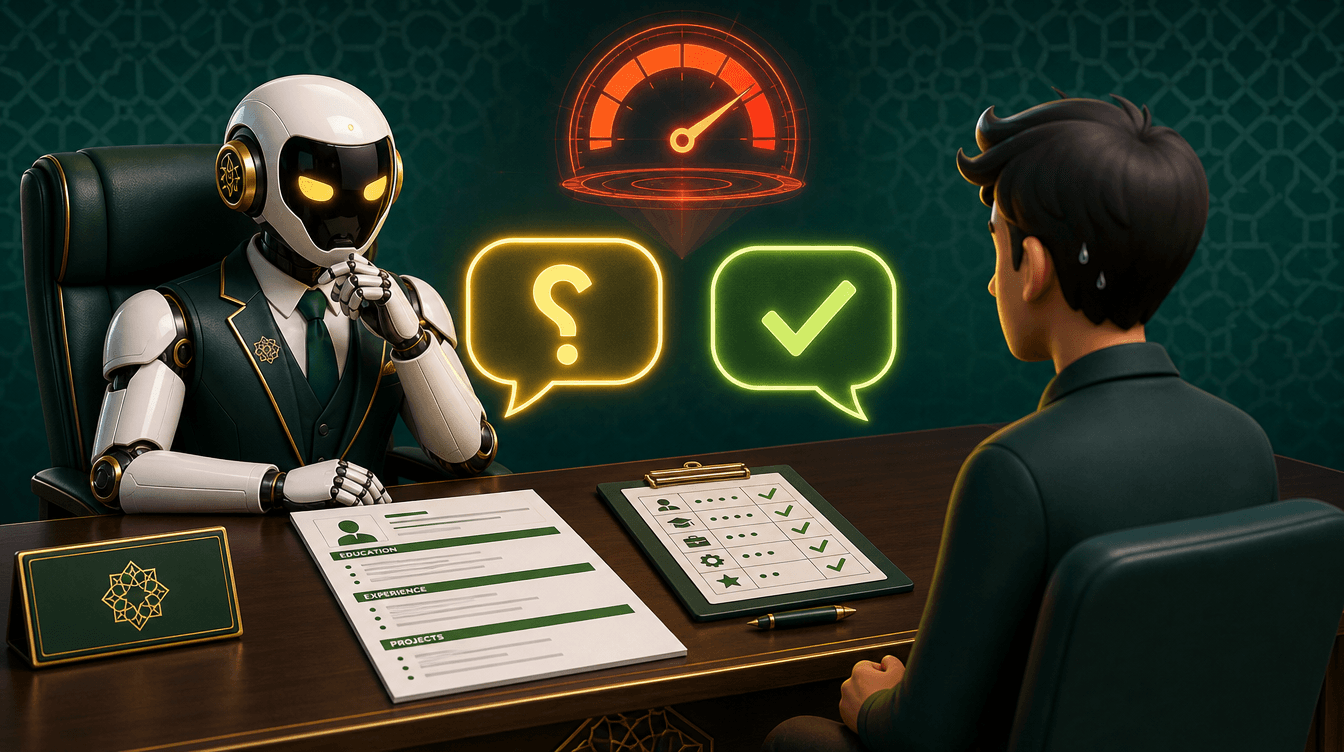
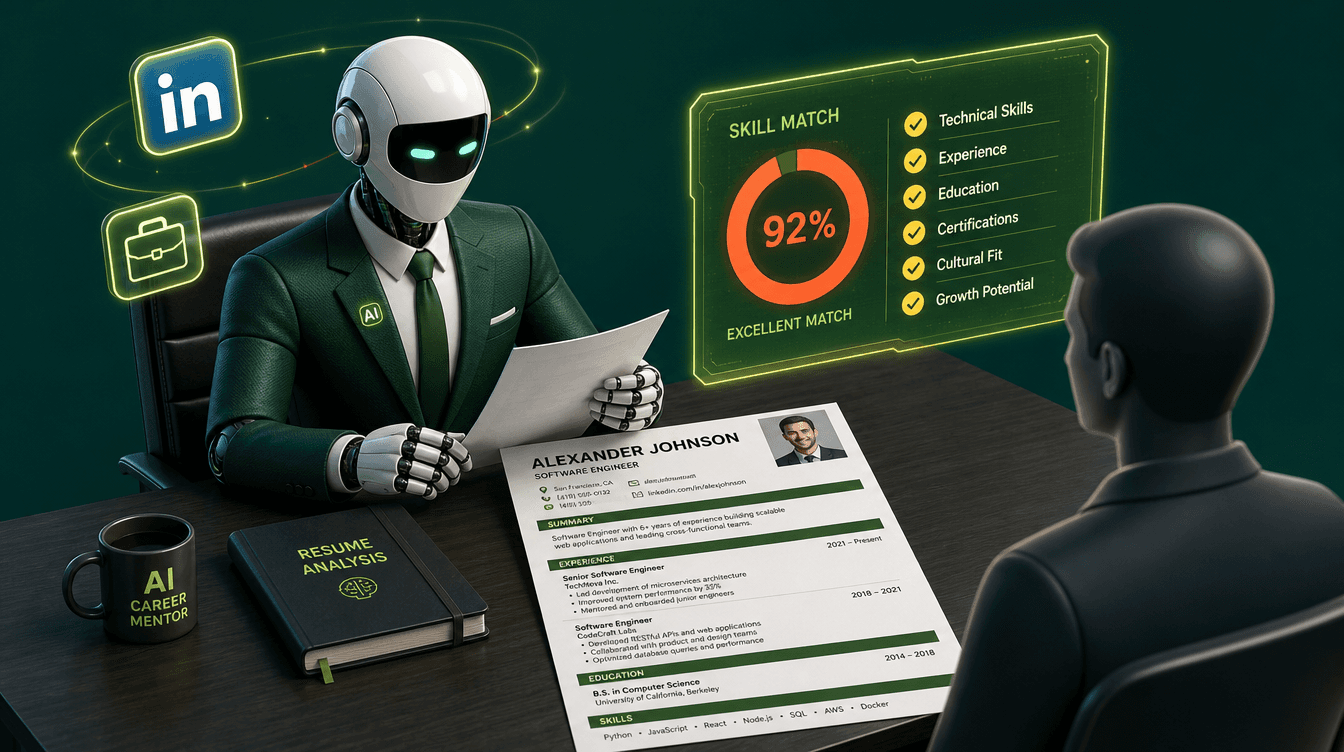
The countermeasure is not harder trivia — it is live work. A rehearsed answer survives a question; a live briefing test survives nothing. Candidates who prepare this way are often your strongest hires — see how the same tools power the job-seeker workflow — the point is that your interview must measure judgment, not recall.
FAQs
What should an AI professional's portfolio contain?
Shipped, openable artifacts: a skill file with its references and templates, a working agent, or an automation pipeline they can walk through end to end — including what breaks it and how it recovers.
What is the single most revealing interview question?
"Show me something you shipped, and tell me what breaks it." It forces proof of work, honest limits, and maintenance thinking in one answer — the three things résumés cannot fake.
Candidates are prepping with AI interviewers. Does that invalidate interviews?
No, it changes them. Mock-interview simulators and CV coaches raise the floor, so stop testing rehearsed answers. Test live briefing on a messy goal — judgment does not rehearse well.
Do I need to be technical to run this hiring process?
No. You are judging artifacts and reasoning, not code: does the thing exist, does the candidate explain what goes in and what comes out, and do they know where it fails.
What does this cost compared to a bad hire?
Some skills on Mahara AI are free, and paid skills start at 499 EGP (about $10), with a 499 EGP per month claim-and-keep subscription and a 7-day refund. A mis-hire costs multiples of that every month — which is why the paid micro-project is the cheapest part of the process.
The best AI professionals are shipping in public. Browse the Mahara AI skills library to see what packaged expertise looks like — then ask your next candidate for the same thing.