If you run a business, you have sat through at least one conversation where "AI skills" was said four times and explained zero times. Here is the version that respects your time. An AI skill is a downloadable instruction package that makes your AI assistant do one specialized job properly — review a contract, compare prices, build a spreadsheet — instead of the generic, half-confident answers you get from a raw chatbot. That is the whole concept. This article explains it in plain words, shows what it looks like inside a real business day, and tells you exactly what it costs, because you are a business owner and cost was going to be your third question anyway.
For the longer technical version, see what is an AI skill — this one stays in business language on purpose.
What is an AI skill, in plain words?
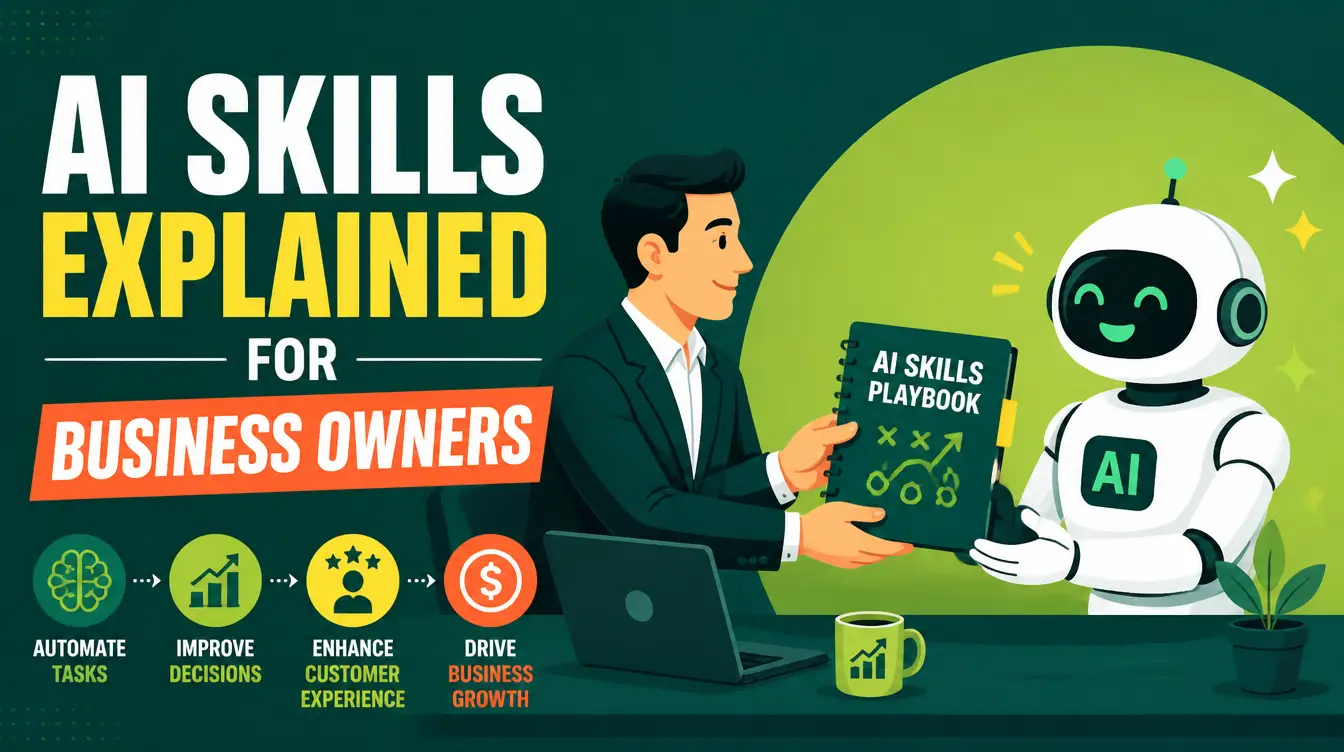
It is a hire you do not have to make. Think about what happens when you bring a specialist into the company: they arrive with a method, checklists, years of pattern recognition, and the discipline to do the job the same careful way every time. An AI skill is that expertise, written down and packaged so your AI assistant — Claude, Manus, or another agent — can follow it. You already have the assistant; the skill is the specialist's playbook you hand it. One download, and the assistant stops guessing and starts working to a method.
How is a skill different from just prompting ChatGPT?
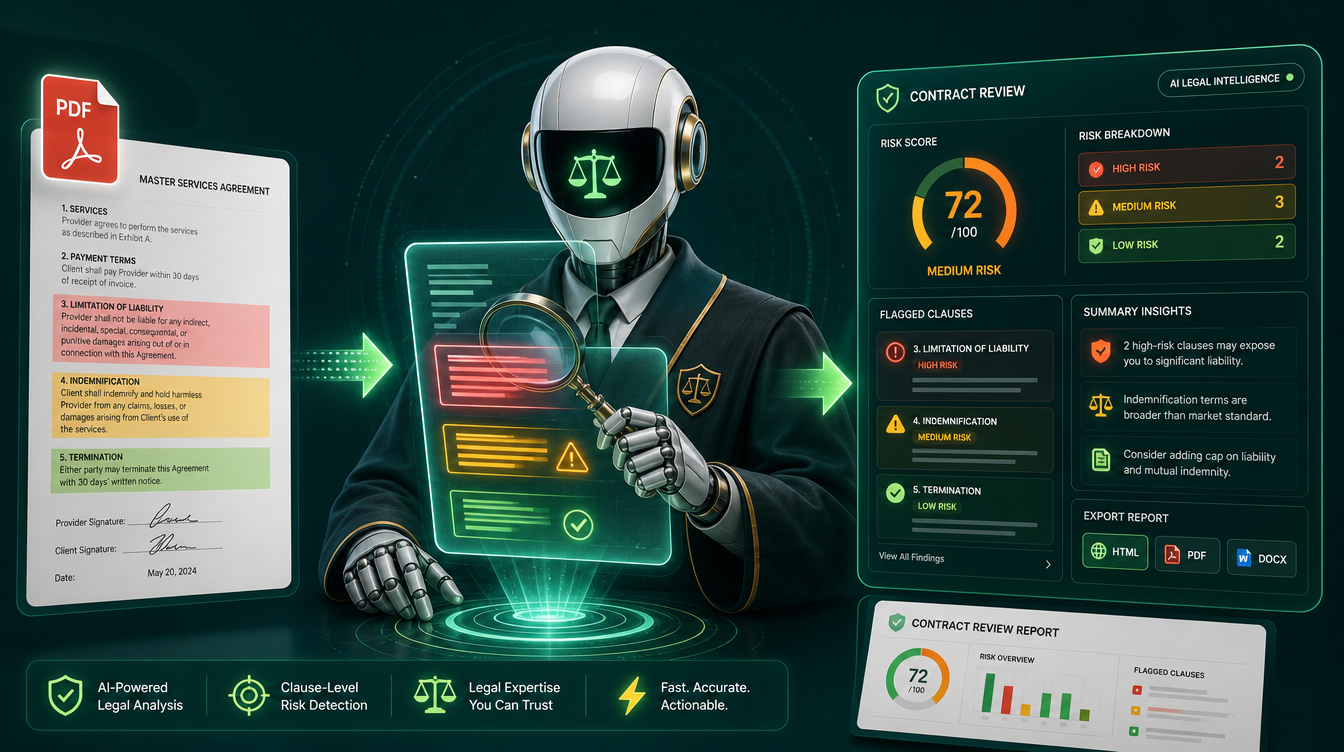
Depth and reliability. A prompt is instructions you write in the moment, from memory, differently every time — and the chatbot answers from its general training, which is broad but shallow on your specific trade. A skill is instructions written once, by a practitioner, covering the steps the job actually requires — what to check first, what to output, what to refuse to invent. The difference shows up in the deliverable: ask a raw chatbot about a contract and you get a summary; run a contract through the AI Contract Reviewer skill and you get every clause scored 1–10 by risk, color-coded in the contract body, and an interactive dashboard with a verdict and a prioritized action checklist. Same underlying AI, completely different professional behavior.
What can a skill do in a real business day?
Four moments every owner recognizes, and what a skill turns each into:
| The moment | The skill | What comes back |
|---|---|---|
| A supplier or lease contract lands in your inbox | AI Contract Reviewer | Risk-scored, color-coded review with a verdict and a negotiation checklist — in Arabic or English |
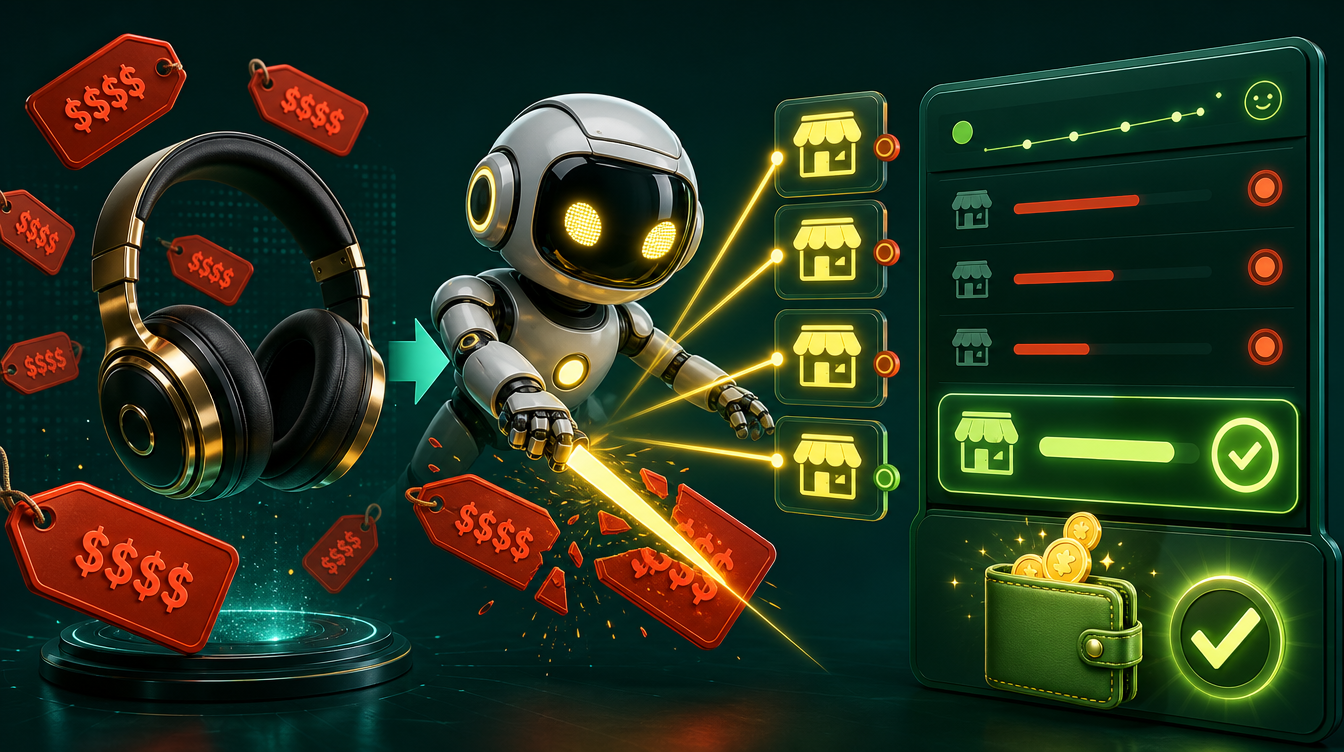
| A purchase where you suspect the first quote is not the best | Best Price Finder | A live comparison dashboard across online stores and local market signals, shipping included, with a buy recommendation |
| Month-end, and the numbers live in six places | Excel Generator | A polished, ready-to-use workbook with charts, conditional formatting, and a KEY INSIGHTS sheet |
| A client asks for a website and you dread writing the copy | Professional Website Builder | Discovery interview, sitemap, page copy, and a full SEO/AEO pack — metadata, FAQ schema, sitemap, robots.txt |
Do you need a developer, an IT department, or a training course?
No, no, and no. Using a skill is closer to installing an app than onboarding software: you download it, load it into your assistant, and describe the task in plain language — Arabic or English, either works. There is no code to write, no server to run, no prompt-engineering course to survive. If you can attach a file to an email, the mechanics are already inside your comfort zone. What actually takes practice is the habit: remembering, when the contract or the price comparison appears, that a specialist for it is one download away.
You would not run payroll on a chatbot's opinion. The same instinct should apply to contracts and prices — generic AI for brainstorming, skills for the jobs where being wrong costs money.
What does it cost, honestly?
Less than you are bracing for. Many skills on Mahara AI are free — including the three shown in the table above — and the paid ones start at 499 EGP (about $10 USD). There is a subscription at 499 EGP per month on a claim-and-keep basis, meaning you keep what you claim, and every purchase carries a 7-day refund. Compare that line item to one hour of a lawyer, an accountant, or a consultant and the economics explain themselves. The detailed breakdown is in what 499 EGP buys you.
Where do you start tomorrow morning?
Pick the task you are personally avoiding right now — that is the one worth automating first. Then browse the library with that task in mind, download the matching skill, and give it the real document or the real request, not a test. You will know within one job whether skills belong in your operation. When you are ready to go wider, the small business owner's shortlist is the natural next read, and how AI skills automate daily work shows the pattern at full scale.

FAQs
What is an AI skill in simple terms?
It is a downloadable instruction package that teaches your AI assistant to do one specialized job the way a specialist does it — with a method, checklists, and a proper deliverable, instead of a generic chatbot answer.
Do AI skills require coding?
No. You download the skill, load it into your assistant — Claude, Manus, or another agent that accepts skills — and describe the task in plain language, in Arabic or English. The mechanics are closer to installing an app than writing software.
Are AI skills free?
Many are, including AI Contract Reviewer, Best Price Finder, and Excel Generator. Paid skills start at 499 EGP (about $10 USD), there is a 499 EGP per month claim-and-keep subscription, and every purchase carries a 7-day refund.
Which AI skill should a business owner try first?
The one that matches the task you are avoiding this week — a contract waiting for review, a purchase needing price comparison, or a report needing a spreadsheet. Task-matching beats every ranking, because you finish the job and see the quality with your own eyes.
Is my business data safe with an AI skill?
A skill is a set of instructions for your assistant — the data goes where your assistant goes, so the answer depends on the AI platform you run it on. For sensitive workflows, business owners who want full data control can run self-hosted setups; the trade-offs are covered in the automation guides on this blog.
Your assistant is already hired. Give it a specialist's playbook and put skills to work on tomorrow's first task.